

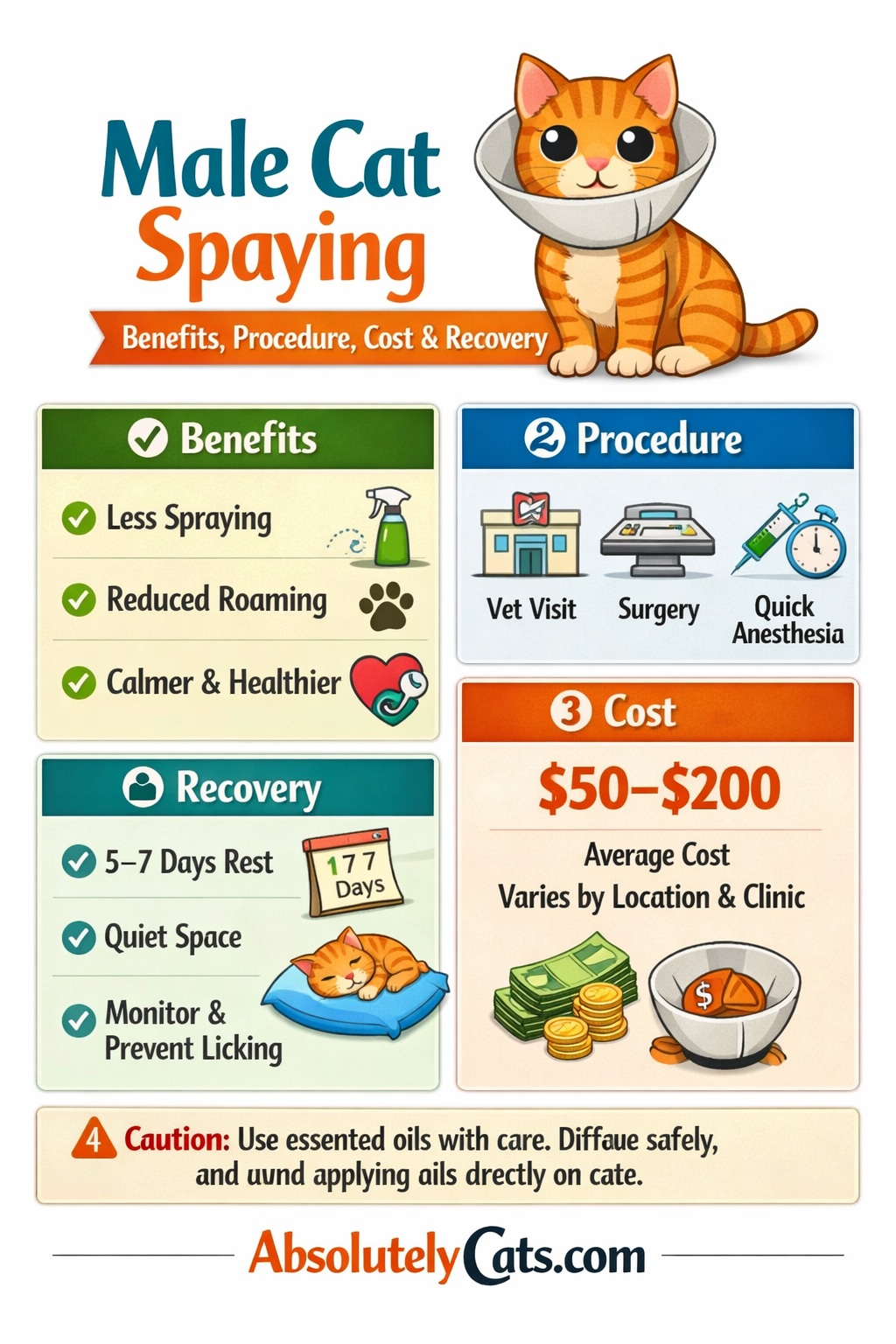
Many cat owners search for information about “male cat spaying.” However, veterinarians do not spay male cats. Instead, they perform a procedure called neutering. Spaying is the surgery used for female cats, while neutering is the procedure used for males.
If you have recently adopted a kitten or own an adult male cat, understanding neutering can help you make informed decisions about your pet’s health and behavior. This guide explains how the procedure works, the ideal age for surgery, recovery expectations, costs, advantages, disadvantages, and the differences between neutered and unneutered male cats.
What Is Male Cat Neutering?
Male cat neutering is a surgical procedure that removes the testicles. Because the testicles produce testosterone, removing them significantly reduces hormone-driven behaviors.
Veterinarians perform neutering under general anesthesia. The surgery is routine, safe, and one of the most common veterinary procedures worldwide.
Many people mistakenly use the term “male cat spaying.” In reality:
- Male cats are neutered.
- Female cats are spayed.
- Both procedures prevent reproduction.
How Does Male Cat Neutering Work?
The neutering process is straightforward.
Before Surgery
Your veterinarian will:
- Perform a physical examination.
- Review your cat’s medical history.
- Recommend fasting before surgery.
- Conduct blood tests when necessary.
During Surgery
The veterinarian:
- Administers anesthesia.
- Makes small incisions in the scrotum.
- Removes both testicles.
- Controls bleeding.
- Leaves the tiny incisions to heal naturally in most cases.
The surgery often takes less than 30 minutes.
After Surgery
Most cats return home the same day. Although they may feel sleepy from anesthesia, they usually recover quickly.
What Happens When a Male Cat Is Neutered?
Several physical and behavioral changes occur after neutering.
Hormone Levels Decline
Testosterone production stops once the testicles are removed. However, existing hormones may remain in the bloodstream for several weeks.
Reduced Roaming
Many intact males travel long distances searching for females. After neutering, this urge often decreases significantly.
Less Urine Spraying
Territorial spraying usually reduces or disappears after surgery, especially when neutering occurs early.
Fewer Fights
Neutered males generally show less aggression toward other cats.
No Ability to Reproduce
The procedure permanently prevents fathering kittens.
Male Cat Spaying Age (Neutering Age)
Although people often search for “male cat spaying age,” the correct term is neutering age.
Most veterinarians recommend neutering between:
- 4 and 6 months of age
Many shelters perform pediatric neutering as early as 8 weeks when kittens meet weight requirements.
Why Early Neutering Is Recommended
Early neutering helps:
- Prevent unwanted litters.
- Reduce spraying behavior.
- Lower aggression risks.
- Limit roaming tendencies.
Can Older Cats Be Neutered?
Yes.
Healthy adult and senior cats can still undergo neutering. However, some established behaviors may not disappear completely if they have become habits.
Female Cat Spaying Age
Female cats are usually spayed between:
- 4 and 6 months old
Veterinarians often recommend surgery before the first heat cycle.
Early spaying provides several benefits:
- Prevents pregnancy.
- Eliminates heat cycles.
- Reduces mammary cancer risk.
- Prevents uterine infections.
Male Cat vs Female Cat Spay
Many cat owners wonder which procedure is more involved.
| Factor | Male Cat Neuter | Female Cat Spay |
|---|---|---|
| Procedure Type | Removal of testicles | Removal of ovaries and uterus |
| Surgery Complexity | Simpler | More complex |
| Recovery Time | Usually shorter | Usually longer |
| Incision Size | Small | Larger |
| Cost | Lower | Higher |
Because female spaying involves entering the abdominal cavity, it generally requires more surgical time and recovery.
Spay vs Neuter Comparison
Although both surgeries prevent reproduction, they differ significantly.
Spaying
Spaying involves removing reproductive organs in female cats.
Benefits include:
- Preventing pregnancy
- Eliminating heat cycles
- Reducing reproductive diseases
Neutering
Neutering removes the testicles in male cats.
Benefits include:
- Reduced aggression
- Less spraying
- Reduced roaming
- Population control
Both procedures contribute to healthier pets and fewer unwanted animals.
Male Cat Neuter Cost
The cost of neutering varies based on location, clinic type, and additional services.
Average costs include:
| Service Type | Estimated Cost |
|---|---|
| Low-cost clinic | $40–$100 |
| Animal shelter program | $20–$80 |
| Private veterinary clinic | $100–$400+ |
Additional costs may include:
- Blood testing
- Pain medication
- Vaccinations
- Microchipping
Many communities offer low-cost spay and neuter programs through local animal welfare organizations.
Pros and Cons of Neutering a Male Cat
Like any medical procedure, neutering has advantages and disadvantages.
Pros of Neutering
Prevents Unwanted Litters
One unneutered male can contribute to hundreds of kittens over time.
Reduces Spraying
Many owners notice dramatic improvements in marking behavior.
Decreases Roaming
Neutered cats often stay closer to home.
Lowers Injury Risk
Because they fight less, neutered cats suffer fewer bite wounds and infections.
Improves Household Harmony
Multi-cat homes often experience fewer territorial disputes.
Reduces Certain Diseases
Neutering eliminates testicular cancer and lowers risks associated with reproductive organs.
Cons of Neutering
Requires Surgery
Although safe, surgery always carries some risk.
Possible Weight Gain
Neutered cats may gain weight if owners overfeed them.
Permanent Procedure
The surgery cannot be reversed.
Some Behavior Changes May Not Occur
Cats neutered later in life may continue certain learned habits.
For most cats, the benefits far outweigh the risks.
Neutered vs Unneutered Male Cats
The differences between neutered and intact males are often noticeable.
Behavior
Neutered Male Cats
- Less territorial
- Less aggressive
- Reduced spraying
- Less roaming
Unneutered Male Cats
- More likely to spray
- More likely to fight
- Frequently roam long distances
- Strong mating instincts
Health
Neutered males generally experience fewer injuries from fighting and roaming.
Lifestyle
Indoor neutered cats often adapt better to family environments.
Recovery After Male Cat Neutering
Most cats recover quickly.
First 24 Hours
Your cat may:
- Sleep more than usual
- Eat less
- Move slowly
These effects usually result from anesthesia.
Days 2–7
Most cats return to normal activity levels.
Owners should:
- Keep cats indoors.
- Limit excessive jumping.
- Monitor the incision area.
- Follow medication instructions.
Signs of Normal Healing
Look for:
- Mild swelling
- Small scab formation
- Normal appetite returning
When to Call Your Veterinarian
Contact your veterinarian if you notice:
- Bleeding
- Severe swelling
- Discharge
- Persistent lethargy
- Refusal to eat
- Difficulty urinating
Common Myths About Male Cat Neutering
Myth 1: Neutered Cats Become Lazy
Neutering does not automatically make cats lazy. Proper nutrition and playtime keep them active.
Myth 2: Cats Need to Mate First
There is no medical benefit to allowing a cat to reproduce before neutering.
Myth 3: Neutering Changes Personality
Most cats remain affectionate and playful. Neutering mainly reduces hormone-driven behaviors.
Myth 4: Indoor Cats Do Not Need Neutering
Indoor cats can still spray, become frustrated, and escape when searching for mates.
What Veterinarians and Cat Owners Say
Many veterinarians recommend neutering because it improves health and reduces unwanted litters.
For community experiences and discussions, these resources can provide additional perspectives:
- Reddit Cat Care Forum: Cat Advice
- VCA Hospitals: Cat neutering and behavior
These forums contain real-life experiences from cat owners, though veterinary advice should always take priority.

Final Thoughts
Male cat neutering is one of the most beneficial decisions many cat owners can make. The procedure is safe, affordable, and effective at preventing unwanted litters while reducing problematic behaviors such as spraying, roaming, and fighting.
Although some people refer to the procedure as “male cat spaying,” the correct term is neutering. Whether you have a young kitten or an adult cat, discussing neutering with your veterinarian can help ensure a healthier and happier future for your feline companion.
Frequently Asked Questions
Is male cat spaying the same as neutering?
Yes. People often say male cat spaying, but the correct medical term is neutering.
What is the best age to neuter a male cat?
Most veterinarians recommend neutering between 4 and 6 months of age.
How long does recovery take after neutering?
Most cats recover within 7 to 14 days.
Do neutered cats stop spraying?
Many cats stop spraying after neutering, especially when the procedure occurs early.
Is neutering painful for cats?
Veterinarians use anesthesia and pain medication to minimize discomfort.
Can an older male cat be neutered?
Yes. Healthy adult and senior cats can usually be neutered safely.
Will neutering calm my cat down?
Neutering often reduces aggression, roaming, and hormone-driven behaviors.
Is neutering cheaper than spaying?
Yes. Male neutering generally costs less because the surgery is simpler.
Can neutered cats still mate?
They may show occasional mating behaviors, but they cannot reproduce.
Do neutered cats gain weight?
Some cats gain weight after neutering, but proper diet and exercise help prevent obesity.
Is it good to spay your male cat?
- Yes. Neutering reduces spraying, roaming, fighting, and risk of diseases like testicular cancer and prostate issues.
- It also prevents contributing to cat overpopulation.
- Downsides: possible weight gain if diet isn’t managed, and minor surgical risks.
Will spaying calm a male cat?
- Often, yes. Removing testosterone lowers aggression, territorial marking, and roaming.
- Cats usually become more relaxed and affectionate, though personality traits remain.
Do male cats change after being spayed?
- Behavioral changes: less aggression, reduced spraying, less roaming.
- Personality remains intact: playful cats stay playful, shy cats stay shy.
- Possible risks: slower metabolism → weight gain if not managed.
Where should a cat sleep after being spayed?
- Quiet, safe, comfortable area (crate, spare room, or bathroom).
- Keep away from other pets, minimize jumping, and provide soft bedding.
- Avoid high-traffic areas; ensure easy access to litter, food, and water.
Is it cruel not to spay a cat?
- Generally yes, from an animal welfare perspective.
- Unspayed cats face health risks (cancers, infections), stress from heat cycles, and contribute to overpopulation.
- Millions of stray cats suffer due to lack of spaying.
- Some critics argue surgery causes pain, but most vets and welfare groups emphasize the long-term benefits outweigh risks.
Do cats realize they are neutered?
- No, not in a human sense.
- Cats don’t understand surgery or reproduction concepts.
- They notice changes in drives (less roaming, aggression, spraying) but don’t connect them to the procedure.

Tammy is the passionate cat enthusiast behind Absolutely Cats. Her journey began with a childhood filled with furry companions, leading her to advocate for cat well-being and a connoisseur of all things feline. Tammy’s dedication to the world of cats is evident in every article, guide, and review she pens.