
Veterinary visits, travel, grooming appointments, fireworks, and major household changes can create significant stress for many cats. Some cats become fearful, aggressive, or extremely anxious during these situations. When behavioral training and environmental management are not enough, veterinarians may prescribe medications to help reduce anxiety.
One medication commonly used for this purpose is trazodone.
Trazodone is widely prescribed in veterinary medicine as a short-term anti-anxiety and mild sedative medication. Although it is FDA-approved for humans, veterinarians often use it off-label in cats to help reduce fear and stress during specific events.
This guide covers trazodone dosage for cats, how it works, benefits, side effects, precautions, and when to consult your veterinarian.
Important: Never give trazodone to your cat without veterinary guidance. The correct dosage varies based on your cat’s health, age, weight, medications, and medical history.
Key Takeaways
- Trazodone is commonly used to reduce anxiety and provide mild sedation in cats.
- Veterinarians often prescribe it before travel, grooming, hospitalization, or vet visits.
- Typical doses range from 25–100 mg per cat depending on the situation and veterinary instructions.
- The medication usually starts working within 1–3 hours.
- Sleepiness and mild incoordination are the most common side effects.
- Only a veterinarian should determine the appropriate dose for your cat.
What is Trazodone?
Trazodone is a serotonin antagonist and reuptake inhibitor (SARI).
Veterinarians use it primarily to:
- Reduce anxiety
- Promote relaxation
- Improve handling during exams
- Ease travel stress
- Assist with post-surgical confinement
- Reduce fear-related behaviors
Unlike stronger sedatives, trazodone generally allows cats to remain awake while feeling calmer and less reactive.
How Trazodone Works in Pets
Trazodone affects serotonin levels in the brain.
Serotonin is a neurotransmitter involved in:
- Mood regulation
- Anxiety control
- Stress responses
- Relaxation
By increasing serotonin activity, trazodone helps reduce anxiety and encourages calm behavior. It also produces mild sedative effects that can make stressful situations easier for cats to tolerate.
Trazodone Dosage Calculator for Cats
Because trazodone dosing varies widely, owners should not calculate doses independently.
Veterinarians typically consider:
- Body weight
- Age
- Overall health
- Existing medications
- Liver function
- Kidney function
- Purpose of treatment
Published studies have used doses ranging from approximately 5 mg/kg to over 15 mg/kg for situational anxiety and sedation, depending on the specific protocol.
Example Weight Reference
| Cat Weight | Example Dose Range* |
|---|---|
| 6 lb (2.7 kg) | Veterinarian determines dose |
| 8 lb (3.6 kg) | Veterinarian determines dose |
| 10 lb (4.5 kg) | Veterinarian determines dose |
| 12 lb (5.4 kg) | Veterinarian determines dose |
| 15 lb (6.8 kg) | Veterinarian determines dose |
*Always follow your veterinarian’s prescription rather than a chart.
Trazodone Dosage for Other Pets
Trazodone is also prescribed for:
Dogs
Veterinarians commonly use trazodone for:
- Separation anxiety
- Noise phobias
- Post-surgical confinement
- Travel anxiety
Rabbits and Exotic Pets
Usage is much less common and requires specialized veterinary supervision.
Never assume a dose intended for a dog or another species is safe for a cat.
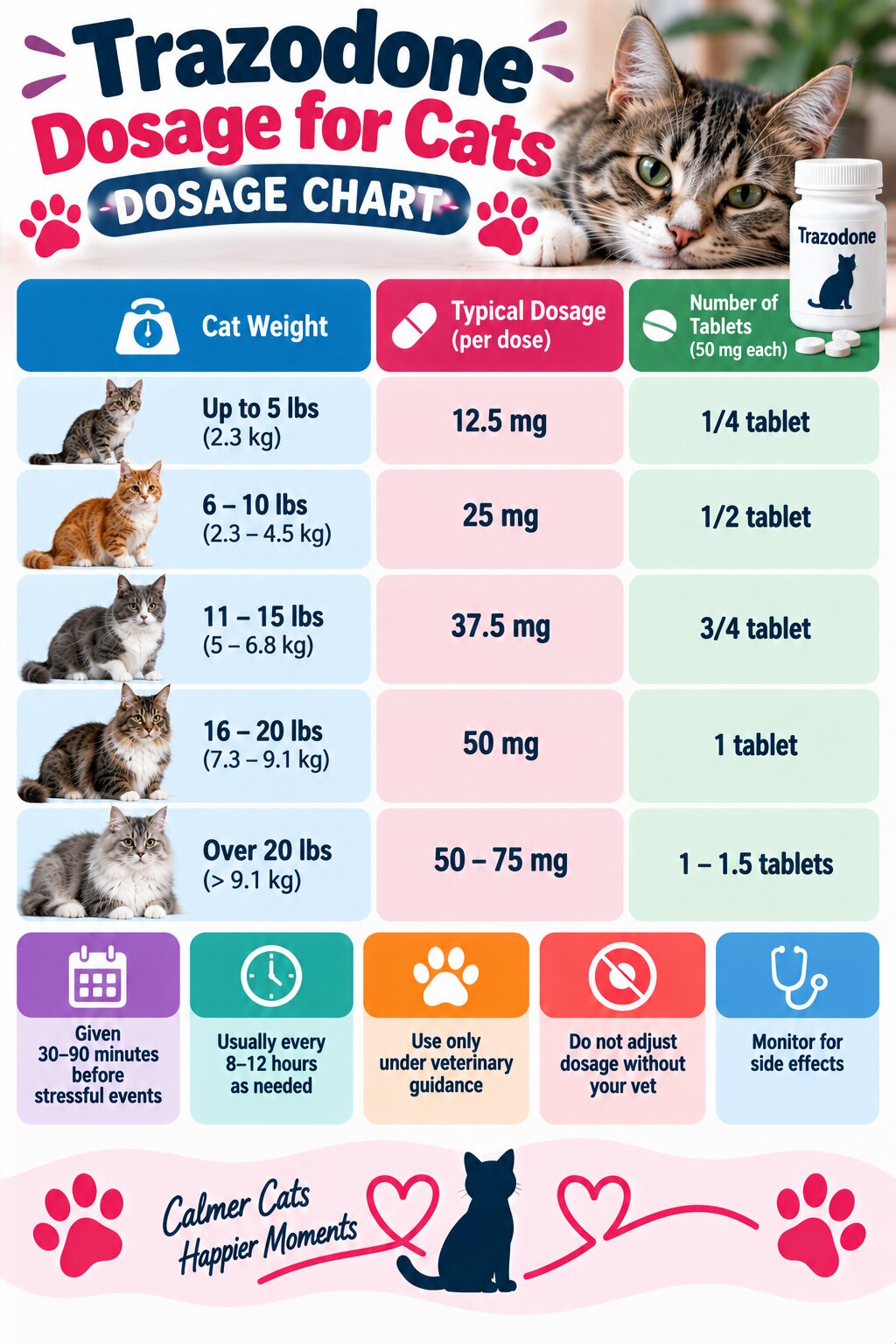
Trazodone Dosage Chart for Cats
Veterinary studies and clinical references have reported the following commonly used ranges:
| Purpose | Typical Dose |
|---|---|
| Mild anxiety | Often starts around 25 mg per cat |
| Veterinary visits | Commonly 25–50 mg per cat |
| Moderate sedation | 50 mg per cat |
| Stronger sedation (veterinary supervision) | 75–100 mg per cat |
Research studies have evaluated 50 mg, 75 mg, and 100 mg doses administered before stressful events and veterinary examinations.
Many veterinary behavior specialists also use approximately 5–10 mg/kg for pre-appointment anxiety management.
When Is Trazodone Given?
Most veterinarians recommend administering trazodone:
1–3 hours before the stressful event.
How to Administer Trazodone
Trazodone is usually available as:
- Tablets
- Capsules
- Compounded formulations
Administration tips include:
Hide in Food
Many owners successfully hide the medication in:
- Pill pockets
- Soft treats
- Small portions of canned food
Follow Feeding Instructions
Some cats tolerate trazodone better with food.
Give Early Enough
The medication needs time to take effect before travel or veterinary appointments.
Perform a Test Dose
Many veterinarians recommend testing the medication at home before an important event. This helps determine how your cat responds.
Important Trazodone Dosage Considerations
Several factors affect dosing.
Age
Senior cats may require closer monitoring.
Medical Conditions
Cats with certain health problems may need dosage adjustments.
Examples include:
- Heart disease
- Liver disease
- Kidney disease
Other Medications
Drug interactions can occur.
Always inform your veterinarian about:
- Prescription medications
- Supplements
- Behavioral medications
Individual Response
Some cats become very sleepy at low doses, while others require higher doses for adequate anxiety relief.
![Trazodone Dosage for Cats: Dosage Chart [Vet Approved]](https://absolutelycats.com/wp-content/uploads/2026/09/Trazodone-Dosage-for-Cats-Benefits-and-Side-Effects.jpg)
Side Effects and Precautions of Trazodone to Watch For
Most cats tolerate trazodone well.
However, side effects can occur.
Common Side Effects
Sleepiness
The most common effect is sedation.
Wobbliness
Some cats appear unsteady while walking.
Reduced Activity
Cats may spend more time resting.
Digestive Upset
Occasionally cats experience:
- Vomiting
- Reduced appetite
- Nausea
Less Common Side Effects
- Agitation
- Restlessness
- Increased vocalization
- Temporary confusion
Serious Reactions
Contact your veterinarian immediately if your cat develops:
- Difficulty breathing
- Collapse
- Severe weakness
- Tremors
- Seizures
Although rare, these reactions require urgent evaluation.
Benefits of Trazodone for Cats
Veterinarians prescribe trazodone because it offers several advantages.
Reduces Travel Anxiety
Many cats dislike car rides.
Trazodone can make travel significantly less stressful.
Improves Veterinary Visits
Fearful cats are often easier to examine after receiving trazodone.
Helps During Recovery
Some veterinarians prescribe trazodone after surgery to encourage calm behavior.
Supports Grooming Appointments
Anxious cats may tolerate grooming more comfortably.
Reduces Stress During Household Changes
Moving, renovations, or introducing new pets can sometimes trigger anxiety.
How to Choose the Right Trazodone Supplement for Your Cat
Technically, trazodone is a prescription medication rather than a supplement.
When obtaining trazodone:
- Use only veterinarian-prescribed products.
- Avoid unverified online sources.
- Follow storage instructions carefully.
- Use the exact formulation prescribed.
Never substitute human medications without veterinary approval.
Trazodone vs Other Medications for Cats
Several medications may be used for feline anxiety.
Trazodone vs Gabapentin
Trazodone
- Primarily anti-anxiety
- Mild sedation
- Commonly used for vet visits
Gabapentin
- Provides sedation and calming
- Frequently prescribed before veterinary appointments
Some veterinarians use both medications together in selected cases.
Trazodone vs Alprazolam
Alprazolam may work well for specific anxiety disorders but generally requires more careful monitoring.
Trazodone vs Fluoxetine
Fluoxetine is usually used for long-term anxiety management rather than short-term stressful events.
Trazodone for Dogs Brand Names
Common human brand names include:
- Desyrel®
- Oleptro®
Veterinarians may prescribe generic trazodone as well.
The brand name itself is less important than receiving the correct dosage prescribed by your veterinarian.
Natural Food Sources and Alternatives of Trazodone
Trazodone does not occur naturally in food.
However, some non-prescription options may support relaxation.
Examples include:
- Pheromone diffusers
- Environmental enrichment
- Consistent routines
- Interactive play sessions
- Calming supplements approved by your veterinarian
Natural alternatives are generally less effective than prescription medications for severe anxiety.
When to Consult Your Veterinarian
Contact your veterinarian if:
- Your cat has never taken trazodone before.
- Side effects occur.
- Anxiety remains severe despite treatment.
- Your cat has heart, kidney, or liver disease.
- Your cat takes other medications.
- You suspect an overdose.
Veterinary supervision is essential whenever behavioral medications are used.
Summary
Trazodone is a commonly prescribed medication that helps many cats cope with stressful situations such as travel, veterinary visits, grooming appointments, and recovery periods. Most cats tolerate the medication well, and common side effects are usually mild and temporary.
Although published studies have shown that doses ranging from 25 mg to 100 mg per cat can be effective in specific situations, the safest approach is always to follow your veterinarian’s instructions. The correct dose depends on your cat’s health, weight, medical history, and treatment goals.
When used appropriately, trazodone can make stressful experiences safer and more comfortable for both cats and their owners.
FAQs
How much trazodone can a cat take?
The dose varies by situation and individual cat. Veterinarians commonly prescribe between 25 mg and 100 mg per cat.
How long does trazodone take to work in cats?
Most cats begin responding within 1–3 hours after administration.
Can trazodone make cats sleepy?
Yes. Sleepiness is the most common side effect.
Is trazodone safe for senior cats?
It can be, but older cats often require closer veterinary monitoring.
Can cats take trazodone every day?
Some cats receive it regularly, but only under veterinary supervision.
Can trazodone be given with food?
Yes. Many veterinarians recommend giving it with a small meal if stomach upset occurs.
What if my cat vomits after taking trazodone?
Contact your veterinarian for guidance before giving another dose.
Can trazodone and gabapentin be used together?
Yes. Veterinarians sometimes prescribe both medications together in specific cases.
What are the most common side effects?
Sleepiness, wobbliness, and mild digestive upset are most common.
Do I need a prescription for trazodone?
Yes. Trazodone is a prescription medication and should only be used under veterinary supervision.

Tammy is the passionate cat enthusiast behind Absolutely Cats. Her journey began with a childhood filled with furry companions, leading her to advocate for cat well-being and a connoisseur of all things feline. Tammy’s dedication to the world of cats is evident in every article, guide, and review she pens.