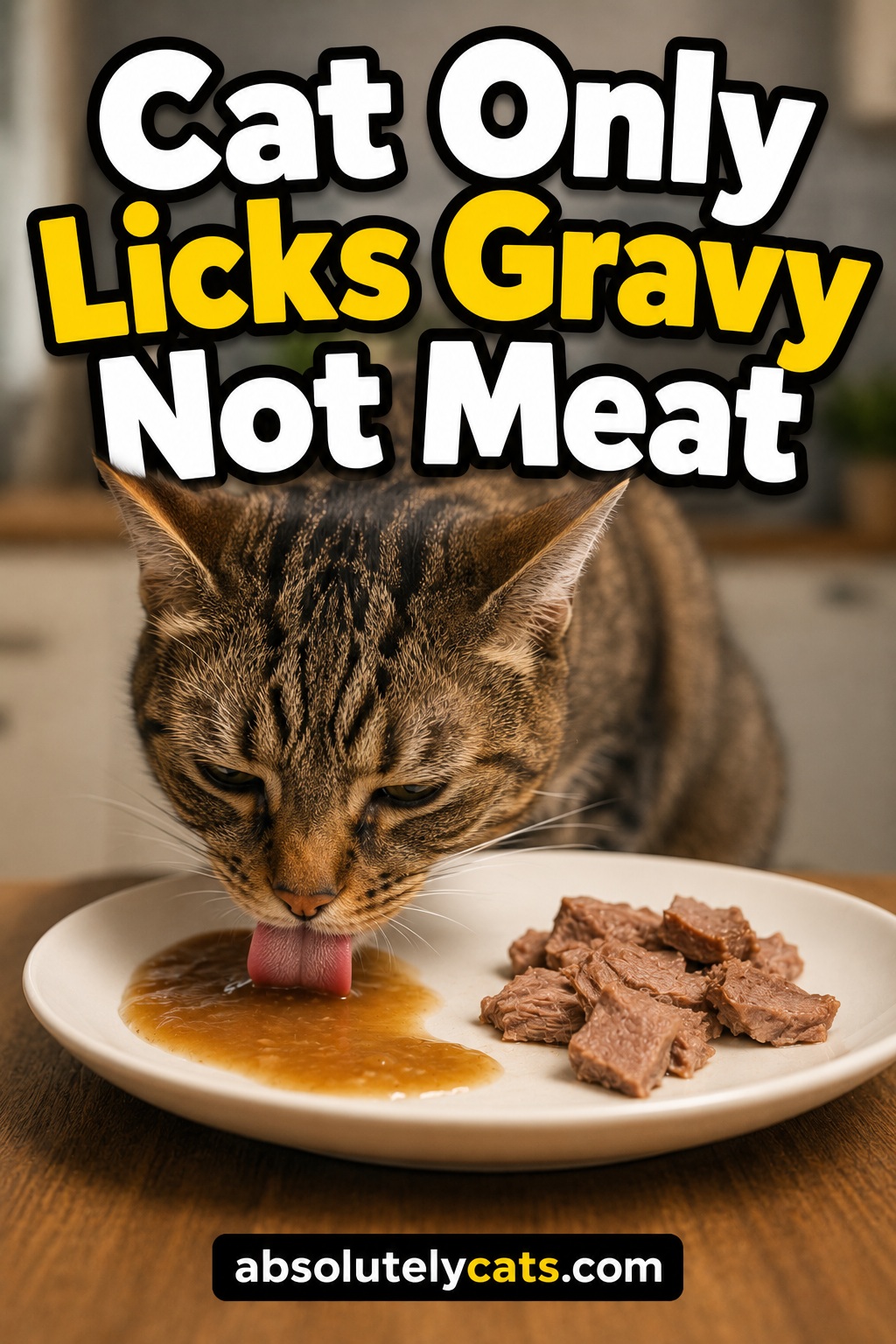
If your cat only licks the gravy from wet food but leaves the meat behind, the behavior is usually related to texture preference, dental discomfort, appetite issues, or picky eating habits. Many cats love the smell and moisture of gravy but dislike chunks, shreds, or pâté textures.
In some cases, however, suddenly avoiding the meat portion of food can indicate mouth pain, illness, nausea, or aging-related changes.
Is It Normal for Cats to Only Eat the Gravy?
Yes — especially in picky cats.
Many cats:
- lick the liquid first
- ignore chunks or shreds
- prefer smooth textures
- eat only certain brands or consistencies
Wet food gravy contains:
- strong smells
- fats
- flavor enhancers
- moisture
which can be more appealing than the solid meat pieces.
If your cat otherwise:
- eats treats
- maintains weight
- behaves normally
- drinks water
the issue is often preference rather than a medical emergency.
Reasons Your Cat Only Licks the Gravy
Your Cat Dislikes the Texture
Texture is one of the biggest reasons cats reject wet food meat.
Some cats dislike:
- chunks
- shreds
- large pieces
- pâté
- chewy textures
Cats can become extremely specific about food consistency.
A cat may happily consume:
- broth
- gravy
- mousse textures
- smooth purées
while refusing solid portions entirely.
Dental Pain or Mouth Problems
Cats with mouth pain often avoid chewing meat.
Common causes include:
- dental disease
- gingivitis
- tooth resorption
- broken teeth
- mouth ulcers
Gravy requires little to no chewing, making it easier to consume.
Signs of dental discomfort include:
- dropping food
- chewing slowly
- bad breath
- pawing at the mouth
- eating only soft foods
Dental disease is extremely common in adult cats.
Nausea or Reduced Appetite
Cats feeling mildly nauseous may seek only strong-smelling liquid portions.
Gravy is:
- easier to consume
- more aromatic
- less filling
- softer on the stomach
Cats with nausea sometimes:
- sniff food repeatedly
- lick food without eating
- walk away from meals
- return later
Your Cat Learned Selective Eating
Cats quickly learn that owners may offer better food options.
If you frequently:
- switch foods
- add treats
- offer tuna
- replace meals
your cat may hold out for preferred foods.
Some cats become “gravy addicts” because the tastiest part is consistently rewarded.
Aging Changes Taste and Smell
Senior cats often develop:
- weaker smell
- reduced taste sensitivity
- chewing discomfort
The gravy’s stronger aroma becomes more attractive than meat chunks.
Older cats may also struggle with:
- chewing tougher textures
- dry mouth
- sensitive gums
The Food May Be Drying Out
Wet food exposed to air loses:
- smell
- moisture
- texture appeal
Cats are highly smell-driven eaters.
Many will consume the gravy immediately while ignoring meat that feels dry or stale afterward.
Why Cats Love Gravy So Much
Cats are naturally attracted to:
- moisture
- fat
- aroma
- warm food
Gravy contains concentrated smells and flavors that stimulate appetite.
This is especially true for:
- picky eaters
- stressed cats
- senior cats
- recovering cats
Is My Cat Just Being Picky?
Possibly.
Some cats become extremely selective due to:
- frequent food changes
- treat overfeeding
- boredom
- learned habits
Picky cats often:
- beg for food
- reject meals
- eat treats normally
- suddenly dislike favorite foods
However, sudden pickiness should always be monitored carefully.
When to Worry About Gravy-Only Eating
The behavior becomes more concerning if your cat also has:
- weight loss
- drooling
- bad breath
- vomiting
- lethargy
- mouth sensitivity
- appetite decline
- difficulty chewing
Sudden refusal of solid food can indicate:
- dental disease
- oral pain
- nausea
- infections
- kidney disease
- gastrointestinal issues
Cats should never go long periods without eating properly.
Signs Your Cat May Have Dental Problems
Bad Breath
Strong odor is often an early sign of dental disease.
Dropping Food While Eating
Cats with mouth pain may:
- chew awkwardly
- tilt their head
- drop meat pieces
- avoid crunchy foods
Pawing at the Mouth
Repeated pawing or face rubbing may indicate oral discomfort.
Red or Inflamed Gums
Swollen gums are common in cats with dental disease.
How to Get Your Cat to Eat the Meat
Try Different Wet Food Textures
Experiment with:
- pâté
- mousse
- minced food
- shredded food
- gravy-based formulas
Some cats strongly prefer smoother textures.
Mash the Meat Into the Gravy
Mixing everything together can encourage fuller eating.
Try:
- crushing chunks with a fork
- adding warm water
- blending food slightly
This improves consistency and aroma.
Warm the Food Slightly
Warm food smells stronger and becomes more appealing.
Use:
- warm water
- brief microwave heating
Never serve hot food.
Reduce Excess Treats
Too many treats can create selective eating habits.
Limit:
- tuna
- table scraps
- lickable treats
- human food
Schedule a Vet Dental Check
If the behavior is sudden or persistent, dental evaluation is important.
Many cats hide mouth pain surprisingly well.
Best Wet Food Types for Picky Cats
Picky cats often prefer:
- gravy-heavy foods
- pâté textures
- mousse formulas
- high-moisture foods
- strong-smelling proteins
Common favorites include:
- chicken
- tuna
- salmon
- turkey
Texture usually matters more than flavor alone.
Common Mistakes Cat Owners Make
Constantly Switching Foods
Frequent changes can reinforce picky behavior.
Offering Too Many Alternatives
Cats quickly learn to wait for “better” food.
Ignoring Dental Symptoms
Many owners assume pickiness is behavioral when dental pain is actually involved.
Leaving Wet Food Out Too Long
Wet food becomes less appealing once it dries out.
Could Stress Cause This Behavior?
Yes.
Stress can reduce appetite and increase selective eating.
Common stress triggers include:
- moving homes
- new pets
- visitors
- loud noises
- routine changes
Some stressed cats only consume the easiest, most aromatic food portions.
Why Senior Cats Often Only Eat Gravy
Older cats commonly experience:
- dental wear
- arthritis affecting posture
- reduced smell
- weaker chewing ability
Gravy becomes easier and more appealing than solid textures.
Senior cats with appetite changes should always be monitored carefully.
Final Thoughts
If your cat only licks the gravy and leaves the meat behind, the behavior is often caused by texture preference, picky eating habits, or mild chewing discomfort. Many cats simply prefer softer, smellier foods and avoid chunkier textures.
However, sudden changes in eating behavior should never be ignored completely. Dental disease, nausea, aging, and illness can all make chewing uncomfortable. Monitoring your cat’s appetite, weight, and overall behavior can help determine whether the issue is harmless pickiness or something that requires veterinary attention.
FAQs
Why does my cat only eat the gravy from wet food?
Most cats do this because they prefer the texture, smell, and moisture of gravy over solid meat chunks.
Is my cat sick if they only lick gravy?
Not always. However, sudden changes in eating behavior can sometimes indicate dental pain, nausea, or illness.
Can dental problems cause cats to avoid meat?
Yes. Cats with tooth or gum pain often avoid chewing tougher food pieces.
Should I change my cat’s food texture?
Trying pâté, mousse, or minced formulas often helps picky cats eat more consistently.
Why does my senior cat only eat gravy now?
Older cats may develop dental problems, weaker smell, or chewing discomfort that makes gravy easier to eat.
Can picky eating become a learned behavior?
Absolutely. Cats quickly learn food preferences if owners frequently switch meals or offer treats.
How do I make wet food more appealing?
Warming the food slightly, adding water, or mixing the meat into the gravy can improve appeal.
When should I take my cat to the vet?
See a veterinarian if your cat:
- loses weight
- stops eating
- drools
- has bad breath
- struggles to chew
- suddenly changes eating habits

Tammy is the passionate cat enthusiast behind Absolutely Cats. Her journey began with a childhood filled with furry companions, leading her to advocate for cat well-being and a connoisseur of all things feline. Tammy’s dedication to the world of cats is evident in every article, guide, and review she pens.