
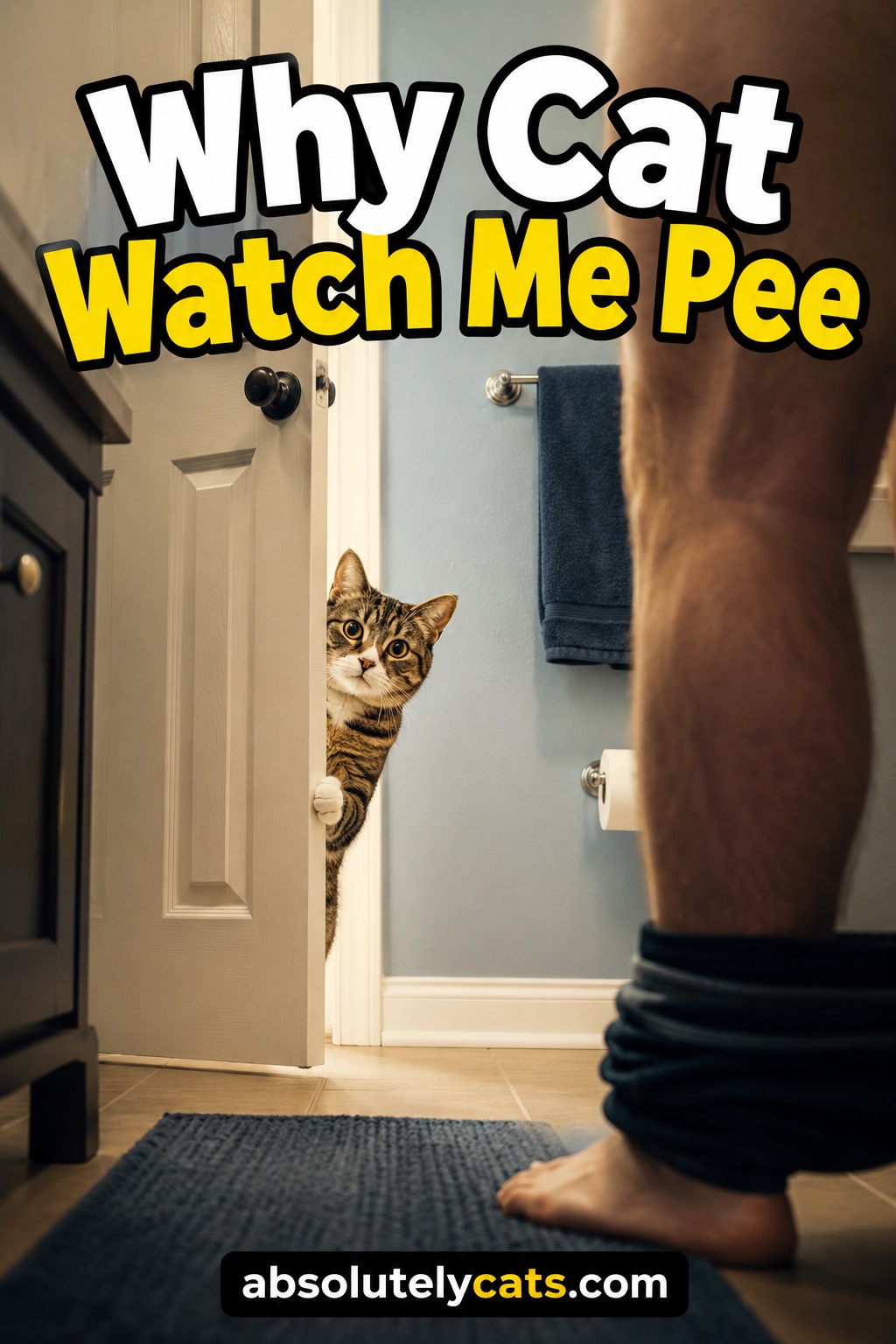
If your cat watches you pee, you’re definitely not alone. Many cats follow their owners into the bathroom and stare while they use the toilet. In most cases, this behavior is completely normal and comes from curiosity, affection, routine, or your cat’s instinct to stay close and aware of your movements.
While it may feel awkward or funny, your cat usually isn’t judging you. They simply see the bathroom as another interesting part of your shared territory.
Is It Normal for Cats to Watch You Pee?
Yes, this behavior is extremely common in indoor cats.
Cats are naturally curious animals that like to monitor their environment and the people they trust. Since bathrooms are small, quiet spaces where owners are temporarily “trapped,” many cats become interested in what’s happening there.
Some cats will:
- sit and stare
- follow you into the bathroom
- paw at the door
- jump onto the sink or counter
- meow outside the bathroom
- wait nearby while you use the toilet
In most situations, it’s harmless and even a sign of bonding.
Why Does My Cat Watch Me Pee? 10 Reasons
There are several reasons your cat may do this.
1. Your Cat Is Curious
Cats are naturally nosy creatures.
Closed doors, running water, unusual sounds, and routines often attract their attention. When you enter the bathroom and shut the door, your cat may become curious about what’s happening inside.
From your cat’s perspective:
- the toilet flushes loudly
- sinks drip water
- showers create steam
- bathroom doors suddenly close
That’s a lot of stimulation for an animal designed to investigate its surroundings.
2. Your Cat Wants to Protect You
Cats can be surprisingly protective.
In the wild, animals are vulnerable while eating, sleeping, or relieving themselves. Some experts believe cats instinctively stay nearby because they view bathroom time as a moment when you’re less alert.
Your cat may simply feel:
“I’ll stand guard while my human is vulnerable.”
It sounds silly, but many cats genuinely display protective behavior toward trusted owners.
3. Your Cat Loves Your Attention
Bathrooms are one of the few places where humans sit still for several uninterrupted minutes.
Your cat quickly learns:
- you won’t walk away
- you’re easy to approach
- you may pet them
- they have your attention
This can reinforce the behavior over time.
If you’ve ever talked to your cat, laughed, or petted them in the bathroom, they may now associate bathroom trips with affection and interaction.
4. Your Cat Is Following Its Routine
Cats thrive on routine and predictability.
They often memorize:
- when you wake up
- when you eat
- where you go
- your bedtime schedule
Bathroom visits become part of your cat’s daily routine. Some cats simply enjoy following their owners from room to room because it feels safe and familiar.
5. Closed Doors Bother Many Cats
Some cats hate closed doors.
It’s not always about the bathroom specifically. Your cat may dislike being separated from you or blocked from part of their territory.
This explains why some cats:
- scratch bathroom doors
- meow loudly outside
- push doors open
- rush in immediately
To a cat, a closed door can feel suspicious or frustrating.
6. Your Cat Likes the Bathroom Environment
Bathrooms contain lots of things cats enjoy:
- cool tile floors
- sinks
- dripping faucets
- warm towels
- enclosed quiet spaces
Some cats simply like hanging out there.
If your cat enjoys drinking faucet water or sleeping on bath mats, the bathroom may already be one of their favorite spots.
7. Your Cat Is Bonded to You
Cats often follow people they trust most.
Watching you in the bathroom may be a sign your cat:
- feels attached to you
- enjoys your company
- wants closeness
- feels safest nearby
Strongly bonded cats often shadow their owners throughout the house, including during bathroom trips.
This is especially common in:
- indoor-only cats
- single-pet households
- affectionate breeds
- cats with separation anxiety
8. Your Cat Learned the Behavior Gets Rewards
Cats repeat behaviors that work.
If your cat receives:
- pets
- attention
- conversation
- treats
- amusement
while following you into the bathroom, they’ll likely continue doing it.
Even laughing at your cat can unintentionally reinforce the behavior.
9. Your Cat Is Bored
Indoor cats sometimes look for stimulation anywhere they can find it.
Bathroom visits can become entertaining because:
- something is happening
- water may run
- doors open and close
- humans pause long enough to interact
Bored cats are more likely to monitor your activities constantly.
10. Your Cat May Have Mild Separation Anxiety
Some cats become anxious when separated from their favorite person.
If your cat:
- follows you everywhere
- cries outside doors
- becomes stressed when alone
- constantly seeks attention
they may feel uncomfortable when they can’t access you.
Bathroom-following alone usually isn’t a problem, but clingy behavior combined with distress may suggest anxiety.
Signs Your Cat’s Bathroom Behavior Is Normal
Usually, there’s nothing to worry about if your cat:
- calmly watches you
- sits nearby quietly
- follows you casually
- acts relaxed afterward
- behaves normally otherwise
For most cats, this is simply quirky social behavior.
When You Should Be Concerned
Bathroom-following may occasionally signal stress or anxiety if your cat also shows:
- excessive vocalization
- destructive behavior
- loss of appetite
- overgrooming
- pacing
- aggression
- constant clinginess
- litter box problems
If the behavior suddenly becomes intense or obsessive, a vet visit may help rule out medical or behavioral issues.
How to Stop Your Cat From Watching You Pee
If the behavior bothers you, there are gentle ways to discourage it.
Keep the Bathroom Door Closed
Consistency matters.
If you don’t want your cat inside, avoid sometimes allowing access and sometimes refusing it.
Provide More Enrichment
Bored cats are more likely to shadow owners.
Try:
- puzzle feeders
- climbing trees
- interactive toys
- window perches
- short play sessions
A mentally stimulated cat is less likely to obsess over your bathroom routine.
Avoid Rewarding the Behavior
Try not to:
- pet your cat during bathroom visits
- talk excessively
- encourage attention-seeking
Even small reactions can reinforce the habit.
Create Alternative Safe Spaces
Give your cat cozy areas nearby where they feel comfortable relaxing without needing to follow you constantly.
Examples include:
- cat beds
- blankets
- window hammocks
- quiet perches
Common Mistakes Cat Owners Make
Punishing the Cat
Never punish bathroom-following behavior.
Your cat is not being “creepy” or dominant. They’re usually acting out of curiosity or attachment.
Punishment can increase stress and damage trust.
Assuming It’s Always Anxiety
Most cats that watch owners in the bathroom are perfectly healthy and emotionally secure.
Don’t assume clinginess automatically means something is wrong.
Ignoring Other Symptoms
If your cat suddenly becomes unusually attached while also acting sick, don’t ignore it.
Behavior changes paired with physical symptoms deserve attention.
Why Bathrooms Are Interesting to Cats
Bathrooms contain many things cats enjoy:
- cool tile floors
- dripping faucets
- running water
- towels
- toilet paper
- enclosed spaces
- echoes and sounds
Some cats particularly love sinks and bathtubs because they stay cool and smooth.
Your Cat Is Being Protective
Cats can be surprisingly protective of people they bond with.
When you use the bathroom, your cat may feel:
- you are vulnerable
- separated from the household
- temporarily inactive
In multi-pet homes, some cats even “guard” owners during bathroom visits.
This behavior is especially common in highly attached or clingy cats.
Closed Doors Make Cats Curious
Cats hate being excluded.
A closed bathroom door can instantly make the room seem:
- mysterious
- important
- restricted
Many cats scratch or meow at bathroom doors simply because they dislike losing access to part of their territory.
Why Does My Cat Sit and Stare at Me Specifically?
Direct staring usually comes from:
- curiosity
- affection
- anticipation
- monitoring your behavior
Your cat may also be waiting for:
- pets
- conversation
- sink water
- attention afterward
Cats often carefully observe human routines, and bathroom visits become part of that daily pattern.
Why Does My Cat Follow Me Everywhere, Including Bathroom?
Bathroom following is often part of a larger attachment pattern.
Cats that follow owners everywhere may:
- feel emotionally bonded
- seek security
- want stimulation
- dislike being alone
- have separation anxiety
Some breeds are naturally more attached than others, including:
- Siamese cats
- Ragdolls
- Burmese cats
- Maine Coons
Kittens and senior cats also tend to be clingier.
Is My Cat Trying to Protect Me?
Possibly.
While cats are not protective in the same way dogs are, bonded cats sometimes monitor their owners during vulnerable moments.
Your cat may:
- sit near the door
- watch quietly
- remain alert
- escort you to the bathroom
This behavior is usually more about attachment and awareness than active guarding.
Still, many owners notice their cats becoming unusually attentive during bathroom visits.
Could Bathroom Watching Be a Sign of Separation Anxiety?
Sometimes.
If your cat:
- cries outside doors
- becomes distressed when separated
- constantly follows you
- panics when you leave home
they may have mild separation anxiety.
Other signs include:
- excessive vocalization
- destructive scratching
- overgrooming
- clinginess
- pacing
However, bathroom curiosity alone is usually not a cause for concern.
When Watching You Pee Might Be a Problem
The behavior itself is harmless, but excessive clinginess may deserve attention if your cat also has:
- appetite changes
- hiding behavior
- aggression
- anxiety
- vocalization
- litter box changes
- sudden personality shifts
Sudden behavioral changes can occasionally indicate:
- stress
- boredom
- illness
- cognitive decline in older cats
If the behavior becomes obsessive or dramatically increases, consider speaking with a veterinarian.
How to Reduce Bathroom Following Behavior
If you want more privacy, there are gentle ways to discourage the habit.
Ignore Attention-Seeking Behavior
Avoid rewarding constant bathroom following with:
- treats
- excessive attention
- excitement
Cats repeat behaviors that produce rewarding outcomes.
Provide More Enrichment
A bored cat is more likely to shadow owners constantly.
Increase enrichment with:
- cat trees
- puzzle feeders
- window perches
- interactive toys
- climbing shelves
Mental stimulation reduces clingy habits.
Create Alternative Safe Spaces
Encourage your cat to relax elsewhere using:
- cozy beds
- blankets
- hiding spots
- sunny windows
Cats often follow owners simply because they enjoy comfort and security.
Keep a Consistent Routine
Cats thrive on predictable schedules.
Consistent:
- feeding times
- play sessions
- sleep patterns
can reduce attention-seeking behaviors.
Funny But Common Bathroom Cat Behaviors
Many owners report cats:
- climbing into pants
- pawing toilet paper
- sitting in sinks
- staring intensely
- meowing during showers
- guarding doors
- jumping onto counters
These behaviors are extremely common and usually harmless.
Final Thoughts
If your cat watches you pee, it is usually a sign of curiosity, trust, attachment, or simple fascination with bathroom routines. Most cats see the bathroom as an interesting environment and enjoy following the humans they bond with most.
While the behavior can feel funny or awkward, it is generally harmless and very common among indoor cats. In many cases, your cat simply wants to stay close to you wherever you go.
FAQs
Why does my cat wait outside the bathroom door?
Cats dislike closed doors and often become curious when they lose access to part of their territory. Waiting outside the bathroom door may also indicate attachment or attention-seeking behavior.
Why does my cat follow me to the toilet every time?
Your cat likely views bathroom visits as part of your shared routine. Some cats also enjoy the quiet environment and opportunity for one-on-one interaction.
Is my cat protecting me in the bathroom?
Possibly to some extent. Bonded cats sometimes monitor owners during vulnerable moments, though the behavior is usually driven more by attachment than true guarding instincts.
Why does my cat stare at me so intensely?
Cats observe human behavior carefully. Staring often means curiosity, affection, monitoring, or anticipation of attention.
Why does my cat scratch the bathroom door?
Cats often scratch doors when they are excluded from a room or want attention. Bathrooms become especially interesting because owners disappear behind closed doors.
Do cats understand privacy?
No. Cats do not think about privacy the way humans do. They mainly care about access, routine, curiosity, and social interaction.
Should I stop my cat from following me into the bathroom?
You generally do not need to stop the behavior unless it becomes excessive or stressful. Providing more enrichment and independent activities can reduce clinginess if desired.
Why are cats obsessed with bathrooms?
Bathrooms offer cool surfaces, running water, enclosed spaces, interesting smells, and uninterrupted access to their favorite human.

Tammy is the passionate cat enthusiast behind Absolutely Cats. Her journey began with a childhood filled with furry companions, leading her to advocate for cat well-being and a connoisseur of all things feline. Tammy’s dedication to the world of cats is evident in every article, guide, and review she pens.