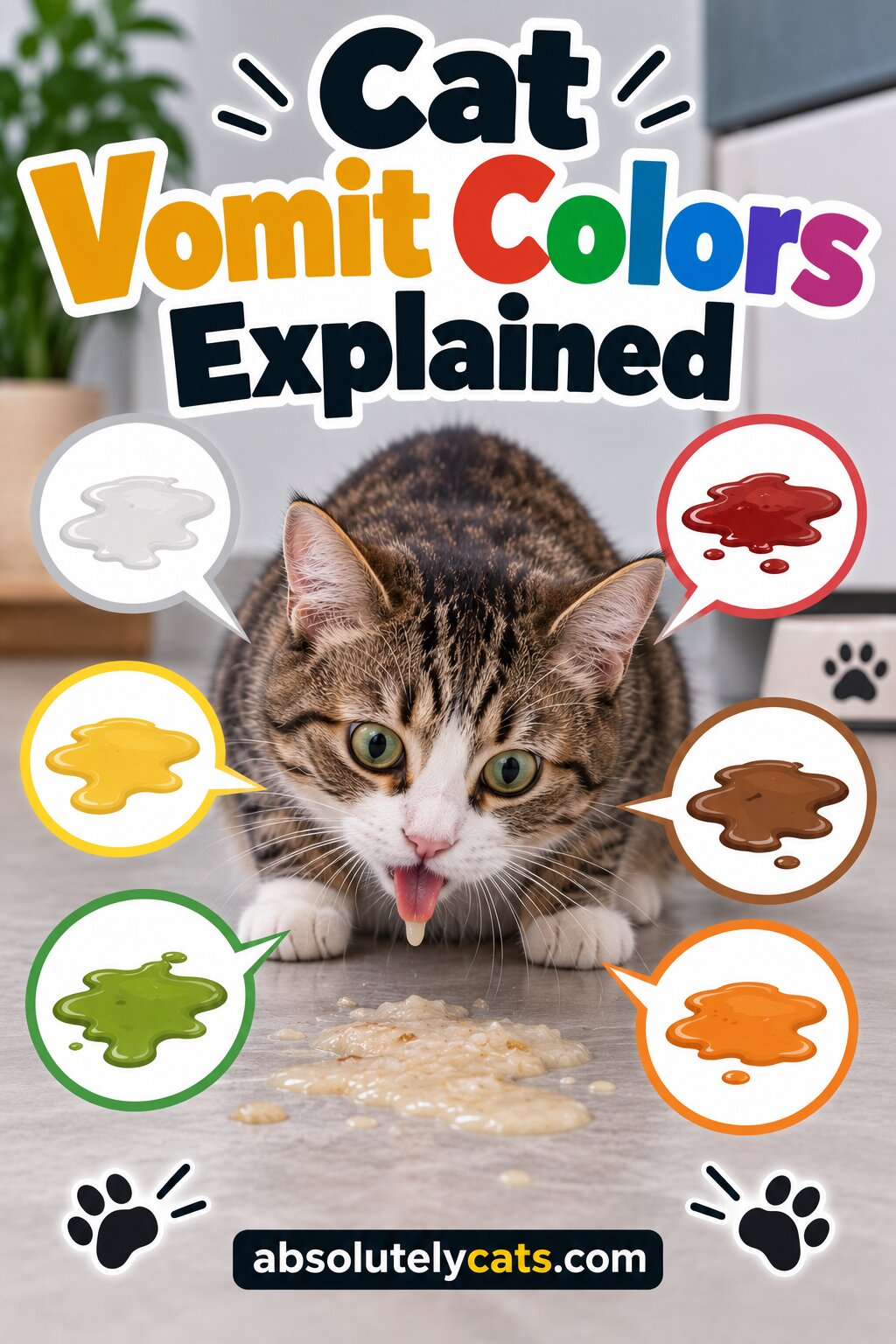
Finding cat vomit on the floor is never pleasant. However, the color and appearance of the vomit can provide important clues about your cat’s health. If your cat is throwing up liquid, foam, food, or hairballs, paying attention to the color can help you understand what might be happening.
While occasional vomiting is relatively common in cats, frequent vomiting or unusual vomit colors may indicate an underlying problem that needs veterinary attention.
This guide explains common cat vomit colors, what they may mean, and when you should contact your veterinarian.
Hairballs vs Vomit
- Hairballs → Cylindrical clumps of fur, usually without liquid.
- Vomit → Often includes fluid, food, or bile, and may be linked to illness.
Cat Vomit Colors Explained
The color of your cat’s vomit can reveal whether it’s a minor upset or a serious health issue.
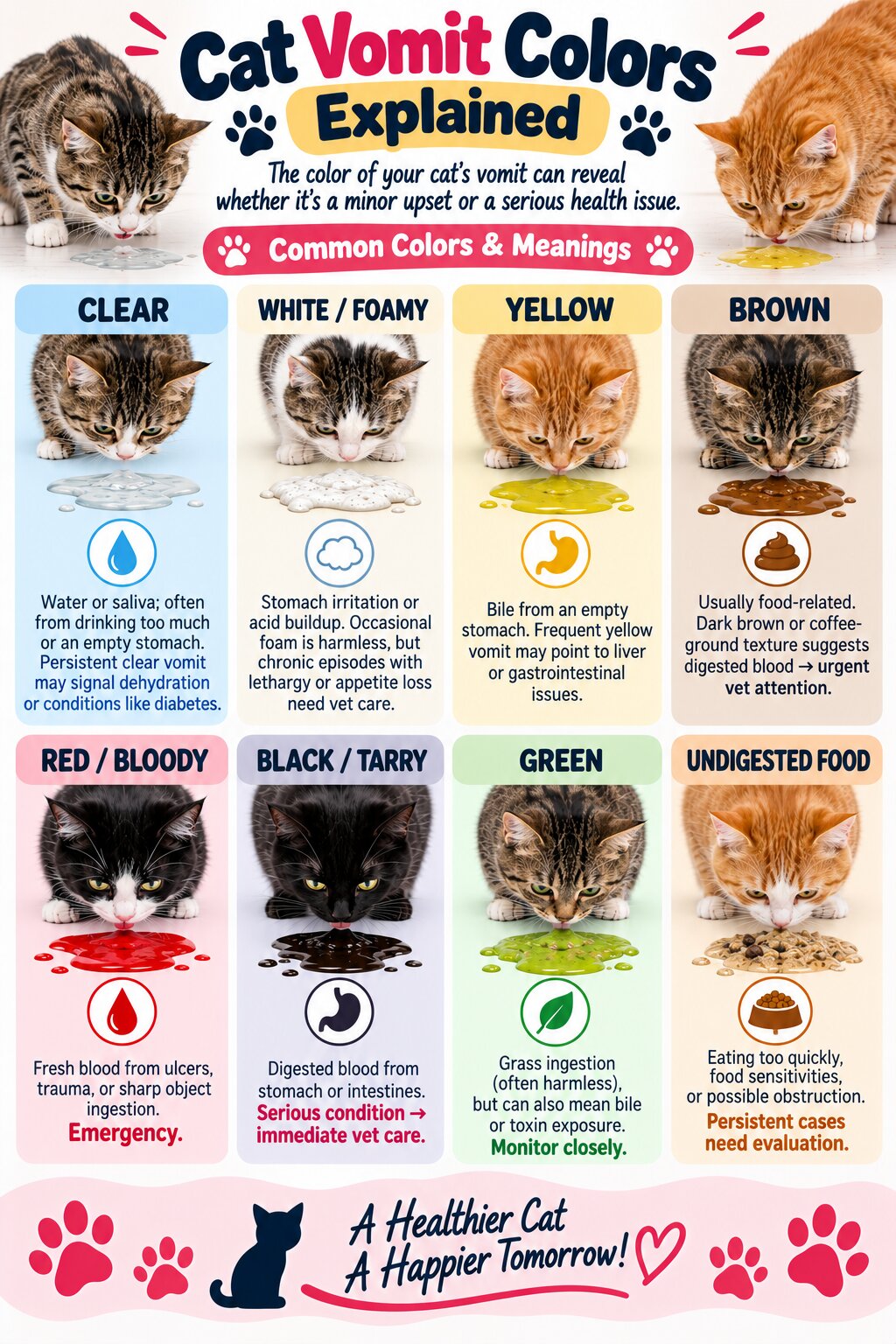
Common Vomit Colors & Meanings
- Clear → Water or saliva; often from drinking too much or an empty stomach. Persistent clear vomit may signal dehydration or conditions like diabetes.
- White / Foamy → Stomach irritation or acid buildup. Occasional foam is harmless, but chronic episodes with lethargy or appetite loss need vet care.
- Yellow → Bile from an empty stomach. Frequent yellow vomit may point to liver or gastrointestinal issues.
- Brown → Usually food-related. Dark brown or coffee‑ground texture suggests digested blood → urgent vet attention.
- Red / Bloody → Fresh blood from ulcers, trauma, or sharp object ingestion. Emergency.
- Black / Tarry → Digested blood from stomach or intestines. Serious condition → immediate vet care.
- Green → Grass ingestion (often harmless), but can also mean bile or toxin exposure. Monitor closely.
- Undigested Food → Eating too quickly, food sensitivities, or possible obstruction. Persistent cases need evaluation.
Is Occasional Vomiting Normal in Cats?
Many cats vomit occasionally.
Common harmless causes include:
- Eating too quickly
- Hairballs
- Minor stomach irritation
- Dietary changes
An isolated episode is often not serious.
However, repeated vomiting, especially when accompanied by other symptoms, should be investigated.
Cat Throwing Up Liquid: What Does It Mean?
Cats sometimes vomit only liquid rather than food.
This often happens when:
- The stomach is empty
- The cat recently drank water
- Stomach irritation is present
The color of the liquid provides important clues.
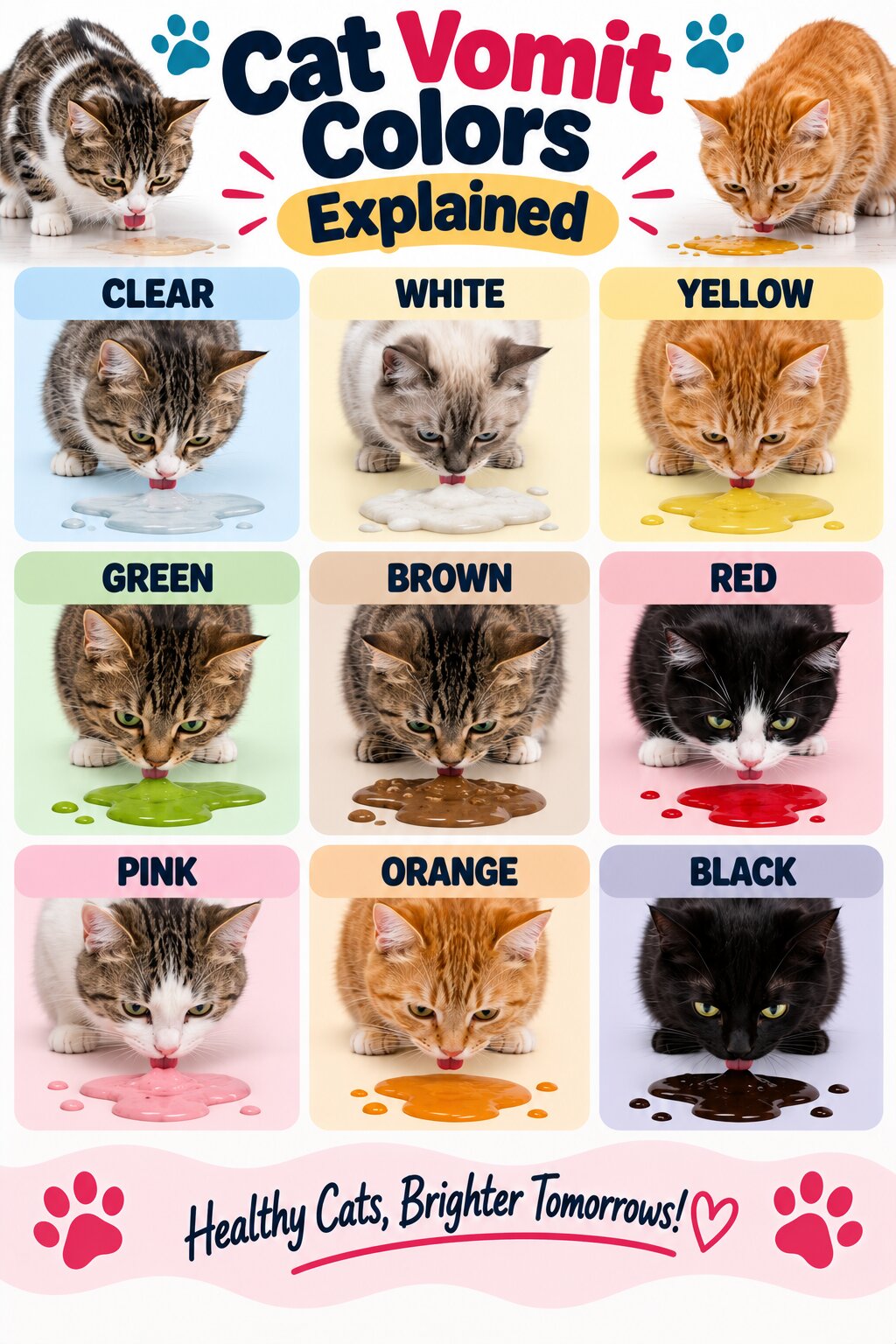
Clear Cat Vomit
What It Looks Like
- Transparent liquid
- Watery appearance
- Little or no foam
Common Causes
- Drinking water too quickly
- Mild stomach irritation
- Empty stomach
- Minor digestive upset
Occasional clear vomit is usually not alarming.
However, repeated episodes deserve attention.
When to Worry
Seek veterinary care if clear vomiting occurs:
- Multiple times per day
- For more than 24 hours
- Alongside lethargy
- Alongside diarrhea
White Foamy Vomit
White foam is one of the most common types of cat vomit.
What It Looks Like
- White bubbles
- Foamy liquid
- Little food content
Common Causes
- Empty stomach
- Mild gastritis
- Hairballs
- Acid buildup
Many cats vomit white foam early in the morning when the stomach has been empty overnight.
Possible Medical Causes
- Inflammatory bowel disease
- Food intolerance
- Digestive disorders
Occasional white foam may not be serious, but frequent episodes require evaluation.
Yellow Cat Vomit
Yellow vomit usually contains bile.
What Is Bile?
Bile is a digestive fluid produced by the liver and stored in the gallbladder.
Common Causes
- Empty stomach
- Hunger-related vomiting
- Digestive irritation
Cats often vomit yellow bile when they go too long without eating.
Helpful Fixes
Some cats benefit from:
- Smaller meals
- More frequent feedings
- Bedtime snacks
When to See a Vet
Frequent yellow vomiting can signal:
- Liver disease
- Pancreatitis
- Gastrointestinal disease
Green Cat Vomit
Green vomit may contain larger amounts of bile.
Common Causes
- Bile reflux
- Digestive upset
- Eating grass or plants
Potential Concerns
Green vomit occasionally indicates:
- Intestinal obstruction
- Severe digestive disease
Contact a veterinarian if green vomiting occurs repeatedly.
Brown Cat Vomit
Brown vomit deserves closer attention.
Possible Causes
- Partially digested food
- Eating something unusual
- Gastrointestinal bleeding
Dark brown vomit sometimes resembles coffee grounds.
Coffee Ground Appearance
This appearance may indicate digested blood from the stomach.
Veterinary evaluation is recommended.
Additional Warning Signs
- Weakness
- Pale gums
- Reduced appetite
These symptoms increase concern.
Red or Bloody Cat Vomit
Red vomit often indicates fresh blood.
Possible Causes
- Mouth injuries
- Dental disease
- Stomach ulcers
- Trauma
- Severe inflammation
Even small amounts of blood should not be ignored.
Emergency Situations
Immediate veterinary care is recommended if:
- Large amounts of blood appear
- Vomiting continues
- Weakness develops
Pink Cat Vomit
Pink vomit often contains small amounts of blood mixed with fluid.
Potential causes include:
- Irritated throat
- Minor stomach irritation
- Early bleeding
Persistent pink vomit warrants veterinary evaluation.
Orange Cat Vomit
Orange vomit may contain:
- Bile
- Partially digested food
- Digestive secretions
Occasional orange vomit may not indicate a serious problem.
However, repeated episodes should be investigated.
Cat Throwing Up Food
Sometimes the color is less important than the contents.
Undigested Food
Possible causes include:
- Eating too quickly
- Overeating
- Food sensitivity
Partially Digested Food
May indicate:
- Delayed stomach emptying
- Digestive disorders
Frequent episodes deserve attention.
Hairballs and Vomit
Hairballs often appear as:
- Cylindrical masses
- Wet fur clumps
- Food mixed with hair
Long-haired cats are especially prone to hairball-related vomiting.
Prevention Tips
- Regular brushing
- Hairball diets
- Increased hydration
Cat Vomit Color Chart
| Color | Common Meaning |
|---|---|
| Clear | Water, empty stomach, mild irritation |
| White Foam | Empty stomach, acid buildup |
| Yellow | Bile, hunger vomiting |
| Green | Bile, grass ingestion |
| Brown | Digested food, possible bleeding |
| Red | Fresh blood |
| Pink | Small amounts of blood |
| Orange | Bile or digestive fluids |
Remember that color alone cannot provide a diagnosis.
Always consider other symptoms.
Why Is My Cat Throwing Up Liquid Frequently?
Frequent liquid vomiting may indicate:
- Food allergies
- Gastritis
- Inflammatory bowel disease
- Parasites
- Kidney disease
- Liver disease
Cats that repeatedly vomit liquid should be examined by a veterinarian.
Other Symptoms to Watch For
Vomiting becomes more concerning when accompanied by:
Loss of Appetite
Refusing food often indicates illness.
Weight Loss
Unexplained weight loss should always be investigated.
Lethargy
Low energy frequently accompanies medical problems.
Diarrhea
Digestive issues often affect both vomiting and stool quality.
Increased Thirst
Can signal kidney disease, diabetes, or other disorders.
How Veterinarians Diagnose Vomiting
Depending on symptoms, your veterinarian may recommend:
Physical Examination
A thorough health assessment.
Blood Tests
Checks for:
- Kidney disease
- Liver disease
- Diabetes
- Infection
Fecal Testing
Identifies parasites and intestinal issues.
Imaging
X-rays and ultrasound help detect:
- Blockages
- Tumors
- Organ abnormalities
When Is Cat Vomiting an Emergency?
Seek immediate veterinary care if your cat:
- Cannot keep water down
- Vomits blood
- Appears weak
- Has trouble breathing
- Shows signs of poisoning
- Experiences repeated vomiting within a short period
These situations may require urgent treatment.
How to Reduce Occasional Vomiting
For otherwise healthy cats, these strategies may help.
Feed Smaller Meals
Frequent small meals reduce stomach irritation.
Slow Down Fast Eaters
Use:
- Puzzle feeders
- Slow-feed bowls
Increase Hydration
Fresh water and wet food support digestion.
Brush Regularly
Brushing reduces swallowed hair.
Avoid Sudden Food Changes
Transition foods gradually over 7–10 days.
Common Myths About Cat Vomit
Myth 1: Vomiting Is Normal for Cats
Occasional vomiting may occur, but frequent vomiting is not normal.
Myth 2: Hairballs Cause All Vomiting
Many medical conditions cause vomiting unrelated to hairballs.
Myth 3: Cats Only Vomit When Sick
Healthy cats may occasionally vomit due to minor digestive issues.
Myth 4: Clear Vomit Is Always Harmless
Persistent clear vomiting can indicate illness.
Helpful Resources
For more information about feline digestive health:
These resources provide reliable information on cat health and digestive disorders.
Final Thoughts
Cat vomit colors can offer valuable clues about your cat’s health. Clear liquid, white foam, and yellow bile are often associated with an empty stomach or mild digestive irritation. However, green, brown, red, or pink vomit may indicate more serious issues that require veterinary attention.
While an occasional vomiting episode is not always a cause for concern, repeated vomiting, blood, weight loss, or behavioral changes should never be ignored. Monitoring the color, frequency, and appearance of your cat’s vomit can help your veterinarian identify the cause more quickly and provide appropriate treatment.
Frequently Asked Questions
What does clear cat vomit mean?
Clear vomit often contains water and may occur after drinking too quickly or from mild stomach irritation.
Why is my cat throwing up yellow liquid?
Yellow vomit usually contains bile and commonly occurs when the stomach is empty.
Is white foamy vomit normal in cats?
Occasional white foam can occur with an empty stomach, but frequent episodes should be evaluated.
What does green cat vomit mean?
Green vomit often contains bile or plant material but may occasionally indicate digestive disease.
Is brown cat vomit serious?
Sometimes. Brown vomit can contain digested blood and should be evaluated if it recurs.
What does blood in cat vomit mean?
Blood may indicate injury, inflammation, ulcers, or other medical conditions.
When should I worry about cat vomiting?
Seek veterinary care if vomiting is frequent or accompanied by other symptoms.
Why does my cat throw up after eating?
Eating too quickly, overeating, or food sensitivities are common causes.
Can hairballs cause vomiting?
Yes. Hairballs frequently trigger vomiting in cats.
Should I take my cat to the vet for repeated vomiting?
Yes. Recurrent vomiting often requires professional evaluation.

Tammy is the passionate cat enthusiast behind Absolutely Cats. Her journey began with a childhood filled with furry companions, leading her to advocate for cat well-being and a connoisseur of all things feline. Tammy’s dedication to the world of cats is evident in every article, guide, and review she pens.