

If you constantly find litter scattered across your floors, carpets, furniture, or even your bed, you’re not alone. One of the most common complaints among cat owners is that their cat tracks litter everywhere.
Although litter tracking is frustrating, it is usually a normal result of how cats use their litter boxes. Fortunately, several simple changes can dramatically reduce the amount of litter that ends up throughout your home.
This guide explains why cats track litter, which litters cause the biggest messes, and the best solutions for keeping your floors cleaner.
Why Does My Cat Track Litter Everywhere?
Litter tracking occurs when small particles stick to your cat’s paws, fur, or tail and get carried outside the litter box.
Every time your cat:
- Digs
- Covers waste
- Steps in litter
- Jumps out of the box
some litter may leave with them.
While some tracking is unavoidable, excessive litter tracking often has specific causes.
Is Litter Tracking Normal?
Yes.
Almost every cat tracks some litter.
However, the amount varies based on:
- Litter type
- Box design
- Paw size
- Fur length
- Cat behavior
Certain cats seem to leave only a few granules behind, while others create a trail through the entire house.
Common Reasons Cats Track Litter Everywhere
Understanding the cause helps you choose the most effective solution.
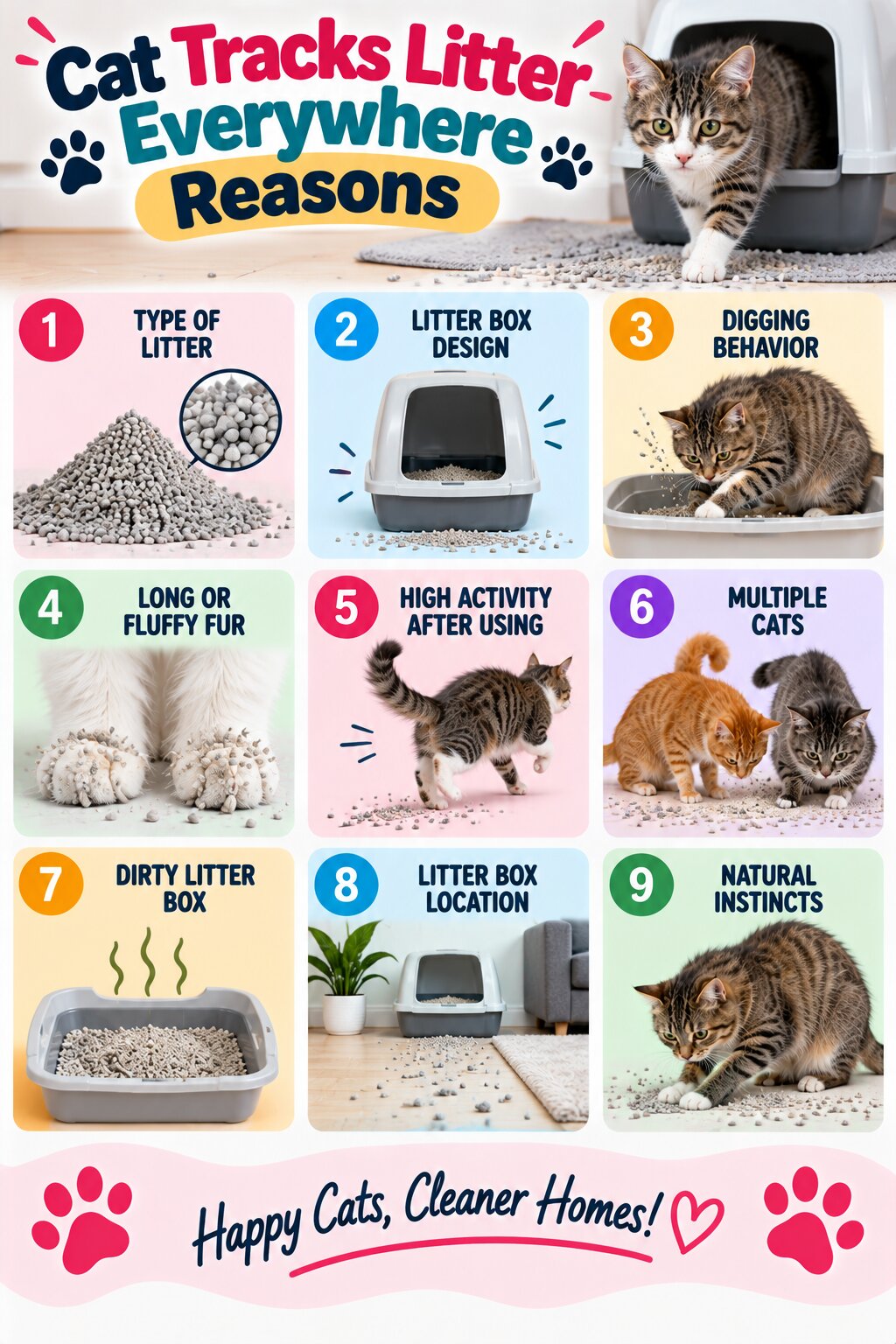
1. Litter Type and Design
Lightweight litter is convenient to carry and pour.
Unfortunately, it also sticks more easily to paws.
Because the particles weigh less, they often:
- Cling to toe fur
- Become airborne
- Scatter further
Many owners notice increased tracking immediately after switching to lightweight formulas.
🔹 Lightweight Litter
- Lightweight litters (clay, clumping) scatter easily and stick to paws.
- Heavier litters (crystal, natural materials) track less but may feel different to cats.
🔹 Litter Box Design
- Low‑sided or open boxes → litter flings out when cats dig or exit.
- High‑sided or covered boxes → better containment, less scatter.
2. Fine Clay Litter
Very fine litter particles frequently attach to paw pads.
The smaller the particle size, the easier it sticks.
Fine clay litter often creates:
- Dust
- Paw tracking
- Floor residue
Although many cats prefer soft textures, finer products usually track more.
3. Long-Haired Cats
Long-haired cats often experience greater litter tracking.
Litter can become trapped in:
- Paw fur
- Rear fur
- Tail fur
Breeds commonly affected include:
- Persian
- Maine Coon
- Ragdoll
- Himalayan
Regular grooming helps reduce the problem.
4. Large Paws
Cats with large paws naturally carry more litter.
The increased surface area provides more opportunities for particles to stick.
This is particularly noticeable in larger breeds.
5. Enthusiastic Diggers
Some cats love digging.
These cats may:
- Kick litter outside the box
- Dig aggressively
- Scatter litter before exiting
Even the best litter cannot completely prevent messes created by enthusiastic diggers.
6. Shallow Litter Boxes
Low-sided litter boxes allow litter to escape easily.
During digging, litter may fly over the sides and onto nearby floors.
Deep-sided boxes often reduce this issue.
7. Overfilled Litter Boxes
Adding too much litter can increase tracking.
Many cats function best with:
2–3 inches (5–8 cm) of litter
Excessive depth allows more litter to attach to paws.
Why Does Litter Stick to My Cat’s Paws?
Several factors contribute.
Moist Paw Pads
Slight moisture helps litter adhere.
Soft Clumping Litter
Fine particles often cling more effectively.
Fur Between Toes
Long toe fur traps litter and carries it around the house.
Static Electricity
In dry climates, static sometimes increases litter adhesion.
Best Litter Types for Reducing Tracking
Some litter materials track less than others.
Low-Tracking Litters
Generally include:
- Larger clay granules
- Wood pellets
- Pine pellets
- Paper pellets
- Tofu pellets
Because these products contain larger particles, they are less likely to stick to paws.
Litters That Often Track More
These commonly create more mess:
- Lightweight clay litter
- Fine clay litter
- Ultra-soft litter
- Dusty formulas
Switching litter often provides significant improvement.
Tips to Help Stop Cat Litter Tracking Everywhere
Fortunately, several solutions work well.
Most owners see improvement after combining multiple strategies.
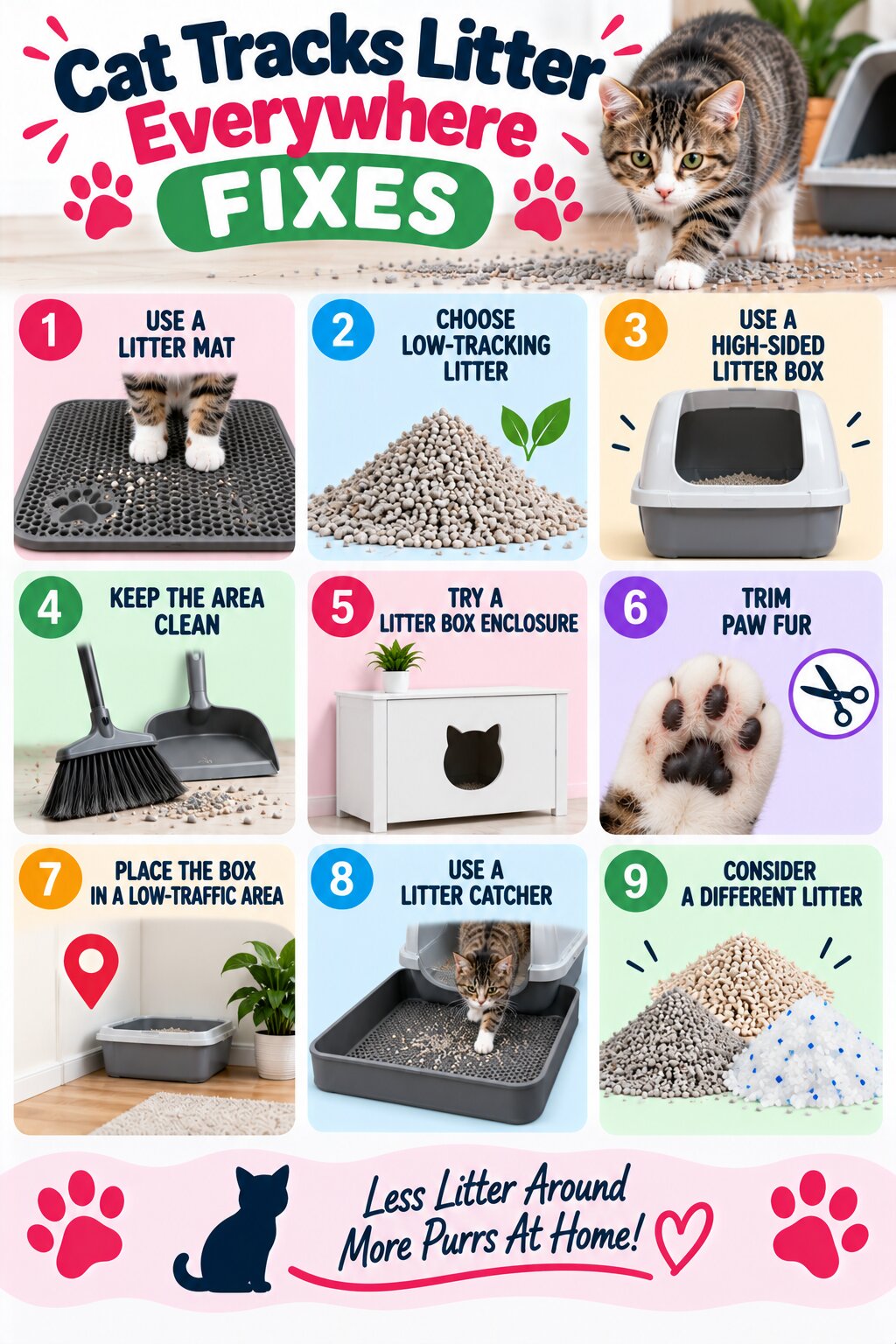
Use a Large Litter Mat
A litter mat is one of the most effective tools available.
The mat catches litter as the cat exits.
Look for mats that:
- Cover a large area
- Have textured surfaces
- Trap particles effectively
Many cats lose most tracked litter within a few steps.
Upgrade to a High-Sided Box
High-sided litter boxes reduce litter scatter.
Benefits include:
- Less digging mess
- Reduced litter ejection
- Cleaner surrounding floors
They work especially well for energetic diggers.
Consider a Top-Entry Litter Box
Many owners find top-entry boxes highly effective.
As cats climb out:
- Litter falls from paws
- Excess particles remain inside the box
However, not all cats enjoy this design.
Use a Covered Litter Box
Covered boxes may help contain:
- Kicked litter
- Airborne dust
- Tracking around the immediate area
Some cats prefer uncovered boxes, so observe your cat’s comfort level.
Trim Paw Fur
Long-haired cats often benefit from trimming excess fur around their paws.
Professional groomers sometimes refer to this as a “paw trim.”
Reducing toe fur minimizes trapped litter.
Place the Box Strategically
Avoid placing litter boxes directly on carpet.
Hard flooring makes cleanup easier and reduces lingering debris.
A dedicated litter station often helps contain messes.
Vacuum Regularly
Even with preventive measures, some tracking remains inevitable.
Frequent cleaning prevents litter from spreading throughout the home.
How Many Litter Mats Do You Need?
Some cats exit the box and immediately sprint away.
In these cases, a single mat may not capture enough litter.
Consider:
- Larger mats
- Multiple mats
- Extended walkways
Increasing the capture area often improves results.
Does Litter Box Size Matter?
Absolutely.
Small litter boxes contribute to tracking because cats have less room to move comfortably.
A properly sized litter box should be:
- At least 1.5 times the cat’s body length
- Wide enough for turning
- Deep enough for digging
Larger boxes often reduce mess.
Cat Kicking Litter Out of the Box
Tracking and litter kicking are related but different problems.
Tracking occurs when litter sticks to paws.
Kicking occurs when cats intentionally throw litter while digging.
Solutions for Kicking
- High-sided boxes
- Covered boxes
- Deeper containers
- Reduced litter depth
These modifications often help.
Can Certain Health Issues Cause More Tracking?
Occasionally.
Cats with mobility issues may:
- Step in waste
- Walk awkwardly
- Carry more litter
Examples include:
- Arthritis
- Obesity
- Paw injuries
A sudden increase in tracking may justify a veterinary examination.
Common Mistakes Owners Make
Choosing Extremely Fine Litter
Soft litter feels pleasant but often tracks heavily.
Using Tiny Litter Mats
Small mats rarely capture enough litter.
Overfilling the Box
Too much litter increases scatter.
Ignoring Grooming
Long-haired cats often need regular paw maintenance.
Best Setup for Minimal Tracking
Many cat owners achieve excellent results with:
- Large litter box
- High sides
- Large litter mat
- Low-tracking litter
- Regular grooming
This combination significantly reduces mess.
Helpful Resources
For additional information about litter box management and feline care:
These resources offer reliable guidance on cat behavior and litter box management.
Final Thoughts
If your cat tracks litter everywhere, you’re dealing with one of the most common challenges of cat ownership. Factors such as litter type, long fur, digging habits, and litter box design often contribute to the problem.
Fortunately, simple adjustments such as switching to a low-tracking litter, adding a large litter mat, trimming paw fur, and upgrading the litter box can dramatically reduce the mess. While eliminating tracking entirely may not be possible, these strategies can keep your floors cleaner and make litter box maintenance much easier.
Frequently Asked Questions
Why does my cat track litter everywhere?
Litter sticks to paws, fur, or tail and gets carried outside the litter box.
What litter tracks the least?
Pellet-based litters, larger granule litters, and some wood litters typically track less.
Do litter mats really work?
Yes. Large, textured litter mats can significantly reduce tracking.
Why do long-haired cats track more litter?
Litter becomes trapped in fur around the paws and toes.
Are covered litter boxes better for tracking?
They often help contain scattered litter but may not eliminate tracking completely.
Can trimming paw fur reduce litter tracking?
Yes. Removing excess fur between the toes often helps.
Why does my cat kick litter out of the box?
Many cats naturally dig and bury waste aggressively.
Does litter depth affect tracking?
Yes. Excessively deep litter often increases tracking.
What is the best litter box for reducing litter mess?
Large, high-sided boxes usually perform best.
Can health problems increase litter tracking?
Sometimes. Arthritis, obesity, and mobility issues may contribute.

Tammy is the passionate cat enthusiast behind Absolutely Cats. Her journey began with a childhood filled with furry companions, leading her to advocate for cat well-being and a connoisseur of all things feline. Tammy’s dedication to the world of cats is evident in every article, guide, and review she pens.