
A sleeping or resting cat should breathe quietly and comfortably. Therefore, if you notice your cat breathing faster than usual while lying down, it is natural to feel concerned.
Sometimes fast breathing is temporary and harmless. However, rapid breathing at rest can also signal pain, stress, overheating, heart disease, respiratory illness, or other medical problems.
Because cats often hide signs of illness, changes in breathing deserve careful attention.
This guide explains what normal breathing looks like, why a cat may breathe fast while resting, and when the situation requires immediate veterinary care.
What Is Normal Breathing for a Resting Cat?
Healthy cats typically take:
20–30 breaths per minute while resting or sleeping
Some cats may occasionally breathe slightly faster or slower.
However, a consistently elevated breathing rate should not be ignored.
How to Count Your Cat’s Breathing Rate
When your cat is sleeping or resting:
- Watch the chest rise and fall.
- Count one rise and fall as one breath.
- Count breaths for 30 seconds.
- Multiply by two.
For example:
- 12 breaths in 30 seconds = 24 breaths per minute
- 20 breaths in 30 seconds = 40 breaths per minute
A resting respiratory rate consistently above 30–35 breaths per minute deserves attention.
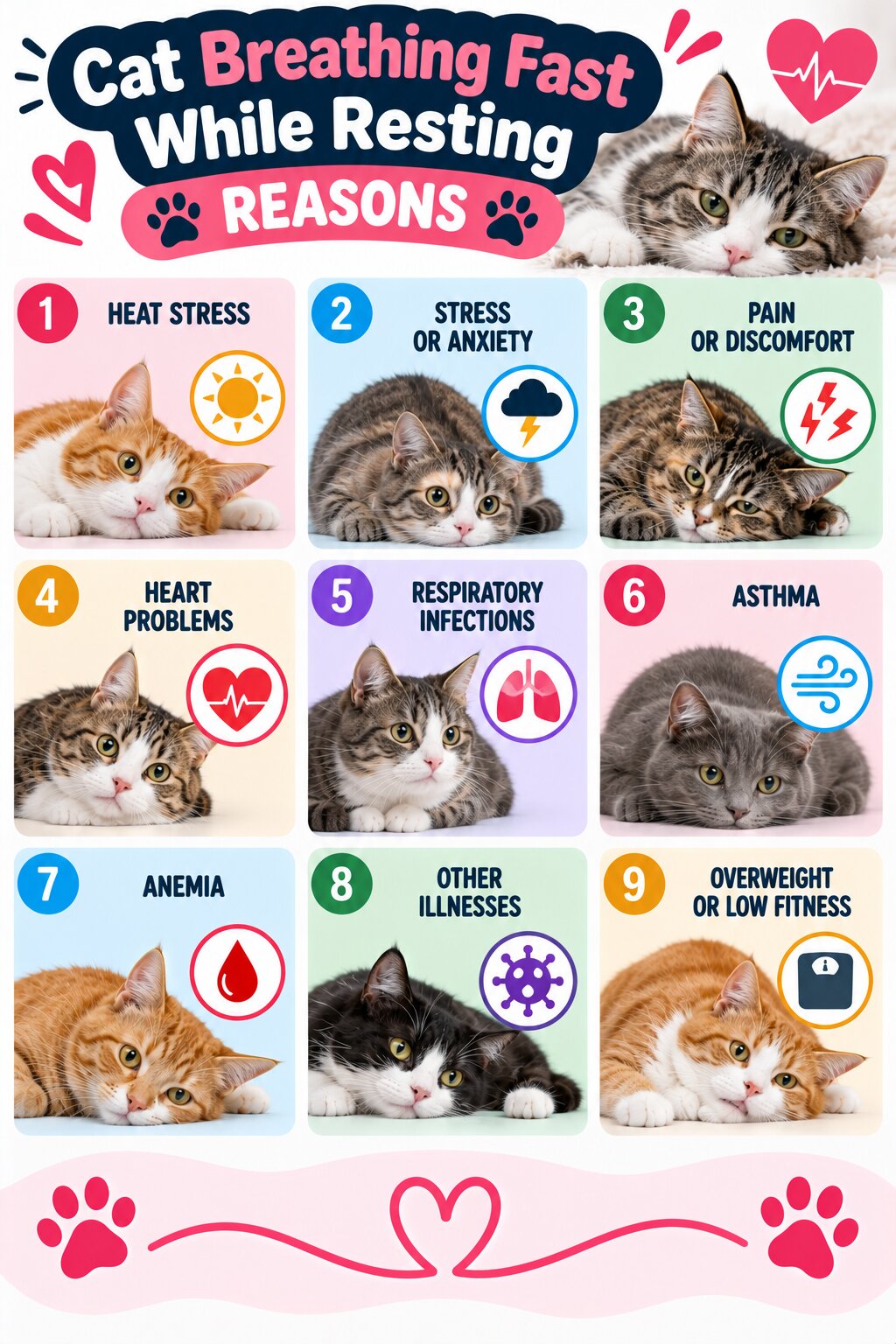
Why Is My Cat Breathing Fast While Resting?
Several factors may cause rapid breathing.
Some are relatively minor, while others require urgent veterinary treatment.
1. Recent Exercise
A cat may continue breathing faster for a short period after:
- Running
- Playing
- Jumping
- Chasing toys
The breathing rate should gradually return to normal after resting.
If it remains elevated, another cause may be present.
2. Stress or Anxiety
Cats sometimes breathe faster during stressful situations.
Triggers may include:
- Visitors
- Loud noises
- Travel
- Veterinary visits
- Household changes
Stress-related breathing usually improves once the cat relaxes.
3. Hot Weather or Overheating
Cats may increase their breathing rate when trying to cool themselves.
Risk factors include:
- High temperatures
- Poor ventilation
- Excessive sun exposure
Signs of overheating may include:
- Panting
- Lethargy
- Seeking cool surfaces
Severe overheating requires immediate veterinary care.
4. Pain
Pain frequently causes rapid breathing.
Cats often hide discomfort remarkably well.
Common painful conditions include:
- Injuries
- Arthritis
- Dental disease
- Abdominal pain
- Post-surgical discomfort
Increased respiratory rate may be one of the first noticeable signs.
5. Fever
A fever increases the body’s metabolic demands.
Consequently, breathing may become faster.
Other symptoms often include:
- Reduced appetite
- Lethargy
- Hiding
- Warm ears or body
Respiratory Causes of Fast Breathing
Several conditions directly affect the lungs and airways.
6. Upper Respiratory Infection
Cat respiratory infections can resemble human colds.
Common symptoms include:
- Sneezing
- Nasal discharge
- Watery eyes
- Congestion
Affected cats sometimes breathe faster because airflow becomes restricted.
7. Pneumonia
Pneumonia causes inflammation within the lungs.
This condition can significantly increase breathing effort.
Symptoms may include:
- Rapid breathing
- Coughing
- Weakness
- Fever
- Poor appetite
Pneumonia requires prompt veterinary treatment.
8. Asthma
Feline asthma affects the airways.
Inflammation narrows breathing passages and makes breathing more difficult.
Signs may include:
- Wheezing
- Coughing
- Fast breathing
- Open-mouth breathing
Asthma can become life-threatening if untreated.
Heart-Related Causes
Heart disease is another important reason for rapid breathing.
9. Heart Disease
Cats with heart disease may breathe faster because their bodies receive less oxygen.
Unfortunately, many cats show few signs until the disease progresses.
Possible Symptoms
- Increased resting breathing rate
- Lethargy
- Weakness
- Reduced activity
Early diagnosis improves treatment options.
10. Congestive Heart Failure
Heart failure allows fluid to accumulate around or within the lungs.
This makes breathing increasingly difficult.
Emergency Signs
- Rapid breathing
- Open-mouth breathing
- Weakness
- Collapse
Immediate veterinary care is required.
Other Medical Causes
11. Anemia
Anemia reduces oxygen transport throughout the body.
To compensate, cats may breathe more rapidly.
Additional symptoms often include:
- Pale gums
- Weakness
- Fatigue
12. Fluid Around the Lungs
Fluid accumulation around the lungs can severely affect breathing.
Potential causes include:
- Heart disease
- Cancer
- Infection
- Trauma
Veterinary treatment is necessary.
13. Trauma or Injury
Falls, accidents, or other injuries can affect breathing.
Internal injuries sometimes cause rapid breathing before other symptoms appear.
Any breathing change following trauma should be considered urgent.
Cat Breathing Fast While Sleeping
Sleeping cats generally breathe more slowly than awake cats.
However, brief increases can occur during dream sleep.
Normal Dream Breathing
You may notice:
- Faster breathing
- Twitching whiskers
- Moving paws
These episodes are usually short.
Persistent rapid breathing during sleep is more concerning.
Cat Breathing Fast but Acting Normal
Many owners notice their cat seems completely normal except for breathing faster.
This situation should not be ignored.
Cats often hide illness very effectively.
Conditions such as:
- Heart disease
- Early respiratory disease
- Pain
- Fever
can develop before obvious symptoms appear.
Monitoring the breathing rate closely is important.
When Is Fast Breathing an Emergency?
Certain symptoms indicate a medical emergency.
Seek immediate veterinary care if your cat shows:
Open-Mouth Breathing
Healthy cats rarely breathe through their mouths.
Blue or Gray Gums
This suggests inadequate oxygen.
Severe Lethargy
A cat that cannot stand or move normally requires urgent care.
Collapse
Collapse is always an emergency.
Struggling to Breathe
Signs include:
- Extended neck
- Elbows held away from body
- Pronounced chest movements
These symptoms require immediate veterinary attention.
How Veterinarians Diagnose Rapid Breathing
A veterinarian may perform:
Physical Examination
Listening to the heart and lungs often provides important clues.
Chest X-Rays
Radiographs help identify:
- Pneumonia
- Fluid buildup
- Heart enlargement
Blood Tests
Blood work can reveal:
- Infection
- Anemia
- Organ disease
Ultrasound
Ultrasound may evaluate heart function and fluid accumulation.
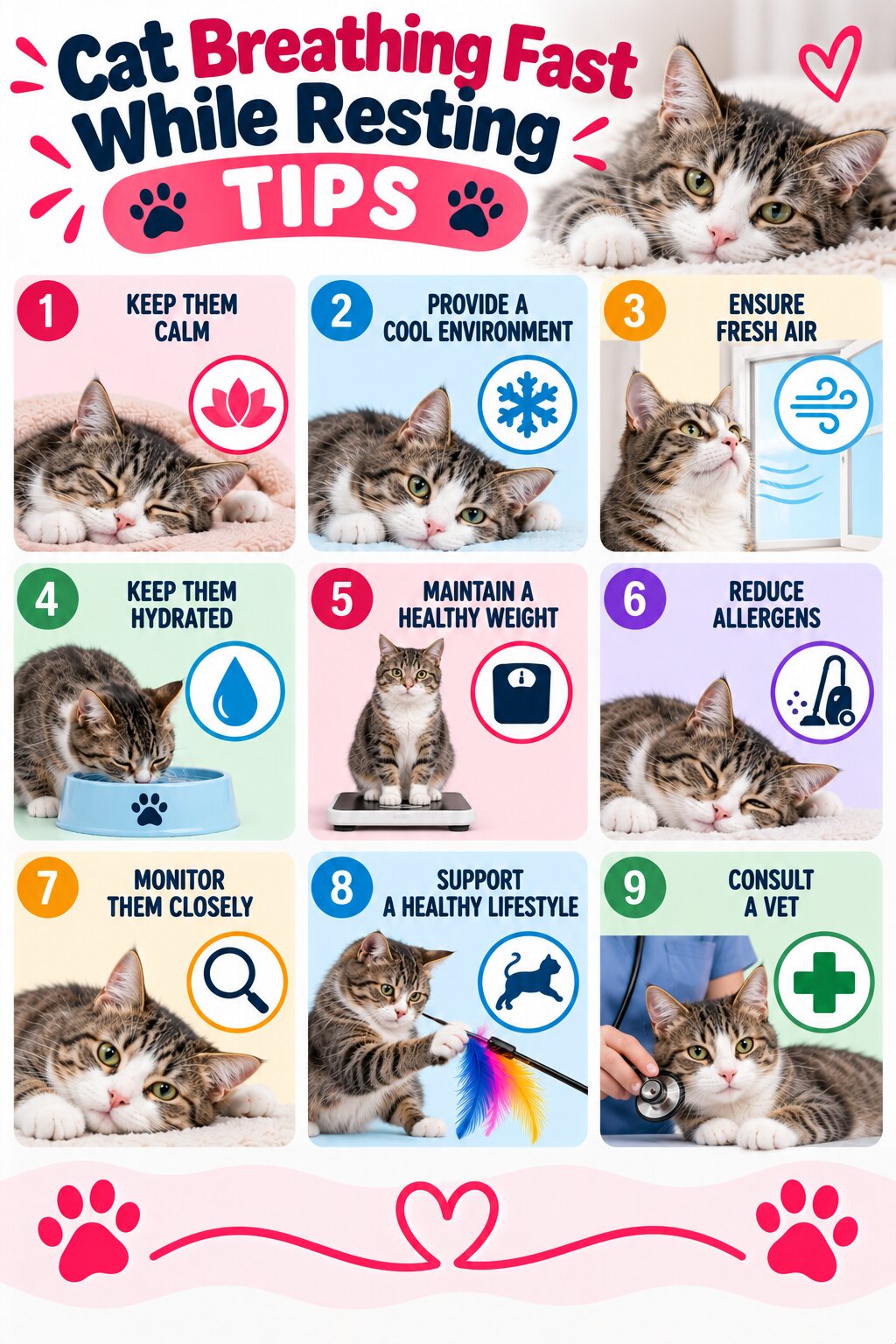
What Should I Do at Home?
If your cat is breathing faster than normal:
Stay Calm
Stress can worsen breathing problems.
Minimize Activity
Encourage quiet rest.
Observe Carefully
Monitor:
- Breathing rate
- Gum color
- Energy level
Avoid Handling Excessively
Cats struggling to breathe may become more distressed with excessive handling.
When to Seek Veterinary Care
Immediate veterinary attention is needed if your cat shows any of these signs:
- Open‑mouth breathing or panting — cats are obligate nasal breathers, so this is always abnormal.
- Rapid breathing — more than 40 breaths per minute at rest.
- Blue, gray, or pale gums — indicates oxygen deprivation.
- Persistent fast breathing (tachypnea) — even without recent activity or stress.
Even if your cat appears otherwise normal, repeated or sustained rapid breathing at rest is a warning sign. Cats often hide illness until it becomes severe, so early evaluation is critical.
How to Monitor Breathing at Home
Many veterinarians recommend tracking resting respiratory rates.
Record:
- Date
- Time
- Breaths per minute
This information helps identify trends and assists diagnosis.
Common Myths About Fast Breathing in Cats
Myth 1: Cats Always Breathe Fast When Sleeping
Healthy sleeping cats generally breathe slowly.
Myth 2: If My Cat Is Eating, Everything Is Fine
Some serious diseases develop before appetite changes occur.
Myth 3: Fast Breathing Is Always Heat Related
Numerous medical conditions can increase respiratory rates.
Myth 4: Open-Mouth Breathing Is Normal
Open-mouth breathing in resting cats is abnormal and often serious.
Preventing Breathing Problems
While not all causes are preventable, these strategies help support respiratory health:
Schedule Regular Veterinary Exams
Routine checkups often detect disease early.
Maintain Healthy Weight
Obesity can increase breathing effort.
Keep Vaccinations Current
Vaccination reduces risk of certain respiratory infections.
Provide a Smoke-Free Environment
Smoke and airborne irritants can affect respiratory health.
Final Thoughts
A cat breathing fast while resting should never be ignored. While temporary factors such as stress, exercise, or warm temperatures can increase breathing rates, persistent rapid breathing may signal pain, respiratory disease, heart disease, fever, or other medical conditions.
The safest approach is to count your cat’s resting respiratory rate and watch for additional symptoms. If breathing remains elevated or your cat shows any signs of distress, contact your veterinarian promptly. Early diagnosis often leads to more effective treatment and better outcomes.
Frequently Asked Questions
What is a normal breathing rate for a resting cat?
Most healthy cats breathe 20–30 times per minute while resting.
Is it normal for my cat to breathe fast while sleeping?
Brief increases during dreaming may occur, but persistent rapid breathing is not normal.
Why is my cat breathing fast but acting normal?
Early illness, pain, stress, or heart disease may cause fast breathing before other symptoms appear.
When should I worry about fast breathing in cats?
Seek veterinary advice if the breathing rate stays above 30–35 breaths per minute at rest.
Is open-mouth breathing normal in cats?
No. Open-mouth breathing in a resting cat is usually considered abnormal.
Can stress cause rapid breathing?
Yes. Anxiety and stressful situations can temporarily increase breathing rates.
Can heart disease cause fast breathing?
Yes. Heart disease is a common cause of elevated respiratory rates.
How do I count my cat’s breathing rate?
Count chest movements for 30 seconds and multiply by two.
Can asthma cause rapid breathing?
Yes. Asthma often causes fast breathing, coughing, and wheezing.
Should I take my cat to the vet for fast breathing?
Yes, especially if the breathing is persistent or accompanied by other symptoms.

Tammy is the passionate cat enthusiast behind Absolutely Cats. Her journey began with a childhood filled with furry companions, leading her to advocate for cat well-being and a connoisseur of all things feline. Tammy’s dedication to the world of cats is evident in every article, guide, and review she pens.