Essential oils have become popular in many homes. People use them in diffusers, cleaning products, sprays, and wellness routines. However, cat owners often ask an important question: Are essential oils safe for cats?
The answer is not always simple. While some essential oils may be safer than others when used correctly, many oils can be harmful or even toxic to cats. Because cats process chemicals differently than humans and dogs, they face unique risks from essential oil exposure.
Before using any essential oil around your feline friend, it is important to understand which oils may be safer, which oils you should avoid, and how to create a cat-friendly environment.
This guide covers everything cat owners need to know about essential oils and feline safety.
Essential Oils for Cats: Are They Safe?
Essential oils are concentrated plant extracts that contain aromatic compounds. These oils often come from flowers, leaves, bark, roots, or seeds.
While humans may enjoy their scents and potential benefits, cats have much greater sensitivity to many plant compounds.
Cats lack certain liver enzymes needed to break down some chemicals found in essential oils. As a result, these substances can build up in the body and cause toxicity.
Therefore, veterinarians generally recommend caution whenever essential oils are used in homes with cats.
The biggest risks occur when:
- Cats ingest oils
- Oils contact the skin
- Cats inhale concentrated vapors
- Oils contaminate fur and paws
Even oils marketed as “natural” can be dangerous.
Why Cats Are Sensitive to Essential Oils
Cats process chemicals differently from humans.
Their liver lacks adequate levels of glucuronyl transferase, an enzyme that helps metabolize many substances.
Because of this difference, cats may struggle to eliminate compounds found in:
- Essential oils
- Certain medications
- Some cleaning products
- Various plant toxins
When exposure occurs repeatedly, toxic compounds may accumulate over time.
Consequently, even small amounts can sometimes create serious health problems.
List of Essential Oils That Are Generally Considered Safer for Cats
No essential oil is completely risk-free around cats. However, some oils appear less problematic when used cautiously, properly diluted, and in well-ventilated areas.
Always consult your veterinarian before introducing any essential oil into a cat household.
Cedarwood Essential Oil
Certain cedarwood varieties are often considered among the lower-risk options.
Potential uses include:
- Home fragrance
- Natural insect deterrence
However, direct contact with cats should still be avoided.
Frankincense Essential Oil
Many holistic pet enthusiasts mention frankincense as one of the safer oils.
Cat owners typically use it:
- In heavily diluted forms
- In ventilated rooms
- Away from direct pet exposure
Copaiba Essential Oil
Copaiba contains compounds that may be gentler than many popular oils.
Even so, responsible use remains essential.
Helichrysum Essential Oil
Some veterinary aromatherapy practitioners occasionally reference helichrysum as a lower-risk option.
Nevertheless, owners should never apply it directly without veterinary guidance.
Chamomile Essential Oil
Roman chamomile sometimes appears on lists of oils considered less irritating than stronger alternatives.
Proper dilution remains important.
Lavender: A Special Case
Lavender often appears on both safe and toxic lists.
The reason is simple.
Small amounts of diluted lavender in well-ventilated spaces may not cause problems for many cats. However, concentrated lavender oil can become toxic if ingested or applied directly.
For this reason, many veterinarians recommend avoiding routine lavender exposure altogether.
What Essential Oils Are Safe for Cats in Diffusers?
Diffusers create one of the most confusing topics for pet owners.
Many people assume a diffuser automatically makes essential oils safe. Unfortunately, this assumption can be dangerous.
Factors That Affect Diffuser Safety
Several factors determine risk:
- Type of oil used
- Room size
- Ventilation quality
- Exposure duration
- Cat’s health condition
- Concentration level
General Diffuser Safety Tips
If you use essential oils:
- Keep rooms well ventilated.
- Allow cats to leave the room freely.
- Use only small amounts.
- Avoid continuous diffusion.
- Monitor your cat closely.
Safer Diffuser Choices
Some pet experts consider these among the lower-risk options:
- Frankincense
- Cedarwood
- Copaiba
- Chamomile
Even then, caution remains necessary.
Never Diffuse Oils Around Cats That Show Symptoms
Avoid all essential oils if your cat has:
- Asthma
- Respiratory disease
- Allergies
- Liver disease
- Chronic illness
These cats may react more severely to airborne compounds.
Essential Oils to Avoid for Cats
Several oils have well-documented toxicity concerns.
Veterinarians commonly advise avoiding these oils entirely around cats.
Tea Tree Oil
Tea tree oil ranks among the most dangerous oils for cats.
Even small amounts may cause:
- Weakness
- Tremors
- Drooling
- Liver damage
Eucalyptus Oil
Eucalyptus contains compounds that cats struggle to metabolize.
Exposure may lead to:
- Vomiting
- Drooling
- Respiratory issues
Peppermint Oil
Peppermint may irritate a cat’s respiratory system.
Cats exposed to peppermint oil sometimes experience:
- Difficulty breathing
- Lethargy
- Gastrointestinal upset
Wintergreen Oil
Wintergreen contains methyl salicylate, a compound similar to aspirin.
Cats cannot process this substance efficiently.
Cinnamon Oil
Cinnamon oil contains highly concentrated compounds that may trigger toxicity.
Clove Oil
Clove oil contains eugenol, which may damage a cat’s liver.
Citrus Oils
Common citrus oils include:
- Lemon
- Orange
- Lime
- Grapefruit
- Bergamot
Many cats react poorly to concentrated citrus compounds.
Pine Oil
Pine oils commonly appear in cleaning products and air fresheners.
Exposure can cause poisoning.
Oregano Oil
Oregano oil is highly concentrated and potentially harmful.
Thyme Oil
Thyme oil may also create toxicity concerns.
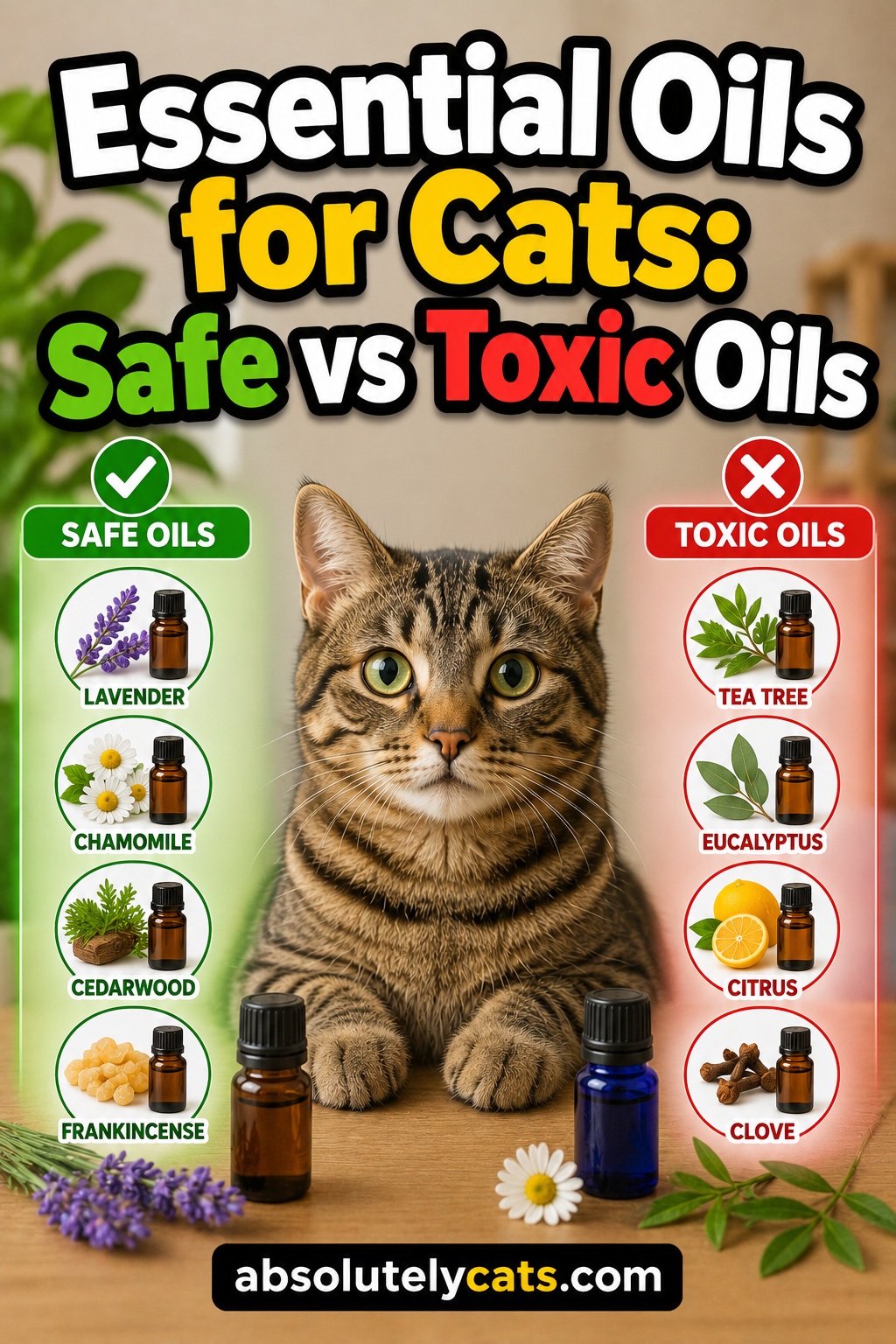
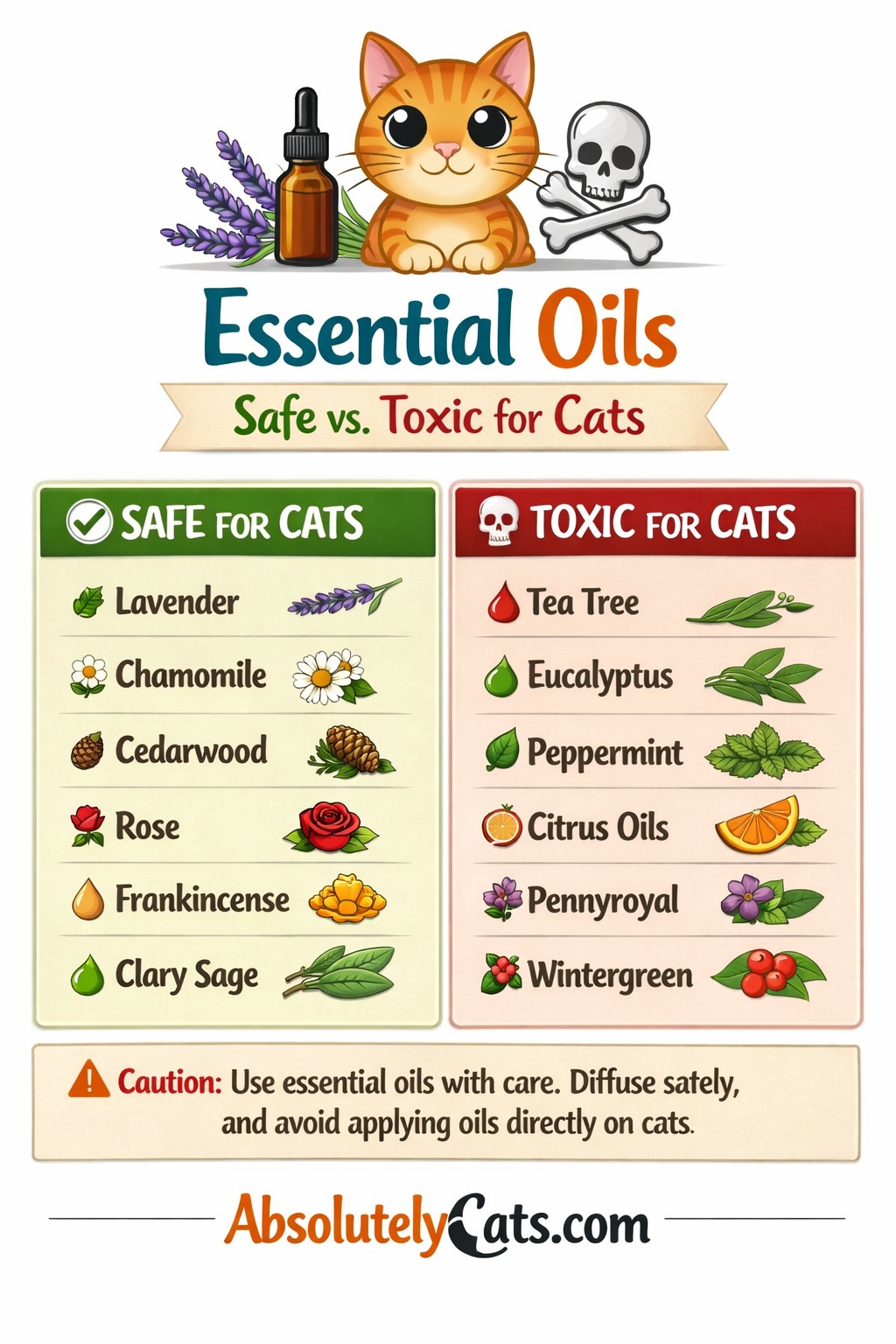
Which Essential Oils Are Safe vs Toxic to Cats?
The following comparison provides a simple overview.
Generally Lower-Risk Oils
- Frankincense
- Cedarwood
- Copaiba
- Chamomile
- Helichrysum
Higher-Risk or Toxic Oils
- Tea tree
- Eucalyptus
- Peppermint
- Wintergreen
- Pine
- Cinnamon
- Clove
- Oregano
- Thyme
- Citrus oils
Remember that “lower risk” does not mean completely safe.
Signs of Essential Oil Poisoning in Cats
Recognizing symptoms early can save a cat’s life.
Common signs include:
Digestive Symptoms
- Vomiting
- Diarrhea
- Drooling
- Loss of appetite
Neurological Symptoms
- Tremors
- Stumbling
- Weakness
- Seizures
Respiratory Symptoms
- Wheezing
- Coughing
- Rapid breathing
- Difficulty breathing
Behavioral Changes
- Hiding
- Lethargy
- Confusion
- Unusual aggression
If any of these symptoms appear after oil exposure, contact a veterinarian immediately.
What Happens If a Cat Licks Essential Oil?
Direct ingestion represents one of the most dangerous forms of exposure.
A cat may ingest oil by:
- Licking spilled oil
- Grooming contaminated fur
- Chewing diffuser reeds
- Walking through oil residue
Even a small amount may cause serious illness.
Never attempt home remedies without veterinary guidance.
Instead, contact a veterinarian or poison control center immediately.
Can Essential Oils Be Applied to Cats?
Most veterinarians strongly discourage direct application.
Some internet sources promote essential oil treatments for:
- Fleas
- Anxiety
- Skin issues
However, many of these recommendations lack strong scientific support.
Direct application increases poisoning risk significantly.
Therefore, owners should avoid putting essential oils on:
- Fur
- Skin
- Ears
- Paws
- Bedding
unless specifically instructed by a qualified veterinarian.
Are Essential Oil Cleaning Products Safe?
Many household cleaners contain essential oils.
Examples include:
- Floor cleaners
- Counter sprays
- Laundry products
- Air fresheners
After cleaning:
- Allow surfaces to dry completely.
- Keep cats away during cleaning.
- Ensure proper ventilation.
Residue left on floors may transfer to paws and later be ingested during grooming.
Safe Alternatives to Essential Oils Around Cats
If you want a fresh-smelling home without risks, consider safer alternatives.
Improve Ventilation
Fresh air naturally removes odors.
Clean Litter Boxes Frequently
Regular litter box maintenance reduces odors significantly.
Use Pet-Safe Air Purifiers
Air purifiers help improve indoor air quality.
Wash Cat Bedding Regularly
Clean bedding contributes to a fresher environment.
Remove Odor Sources
Addressing the source often works better than masking odors.
What Veterinarians Recommend
Most veterinarians recommend a conservative approach.
Their advice often includes:
- Avoid direct oil application.
- Keep oils stored securely.
- Use caution with diffusers.
- Monitor for symptoms.
- Seek veterinary advice before use.
Because research remains limited, caution remains the safest strategy.
Helpful Resources
For additional information about pet safety and essential oils, visit:
These organizations provide reliable information regarding cat health and toxic exposures.
Final Thoughts
Essential oils may smell pleasant to humans, but cats process these substances very differently. While a few oils appear less risky when used carefully, no essential oil is completely risk-free around cats. Tea tree, eucalyptus, peppermint, citrus, pine, and several other oils pose significant toxicity concerns and should generally be avoided.
The safest approach involves limiting exposure, maintaining good ventilation, and consulting a veterinarian before introducing essential oils into your home. When it comes to feline health, caution is always better than regret.
Frequently Asked Questions
Are essential oils safe for cats?
Some oils may be lower risk, but no essential oil is completely safe for all cats.
What essential oils are safe for cats in diffusers?
Frankincense, chamomile, cedarwood, and copaiba are sometimes considered lower-risk options when used cautiously.
Is lavender safe for cats?
Lavender remains controversial. Concentrated lavender oil can be toxic if ingested or applied directly.
Which essential oils are toxic to cats?
Tea tree, eucalyptus, peppermint, citrus, pine, cinnamon, clove, oregano, and thyme oils are commonly considered toxic.
Can I put essential oils on my cat’s fur?
No. Direct application greatly increases poisoning risk.
What should I do if my cat licks essential oil?
Contact a veterinarian immediately for guidance.
Can diffusers make cats sick?
Yes. Certain oils and prolonged exposure may cause illness.
Are natural essential oils safer than synthetic products?
Not necessarily. Natural oils can still be toxic to cats.
Why are cats sensitive to essential oils?
Cats lack certain liver enzymes needed to process many oil compounds.
Can essential oil poisoning be fatal?
Yes. Severe exposure can become life-threatening without prompt treatment.

Tammy is the passionate cat enthusiast behind Absolutely Cats. Her journey began with a childhood filled with furry companions, leading her to advocate for cat well-being and a connoisseur of all things feline. Tammy’s dedication to the world of cats is evident in every article, guide, and review she pens.