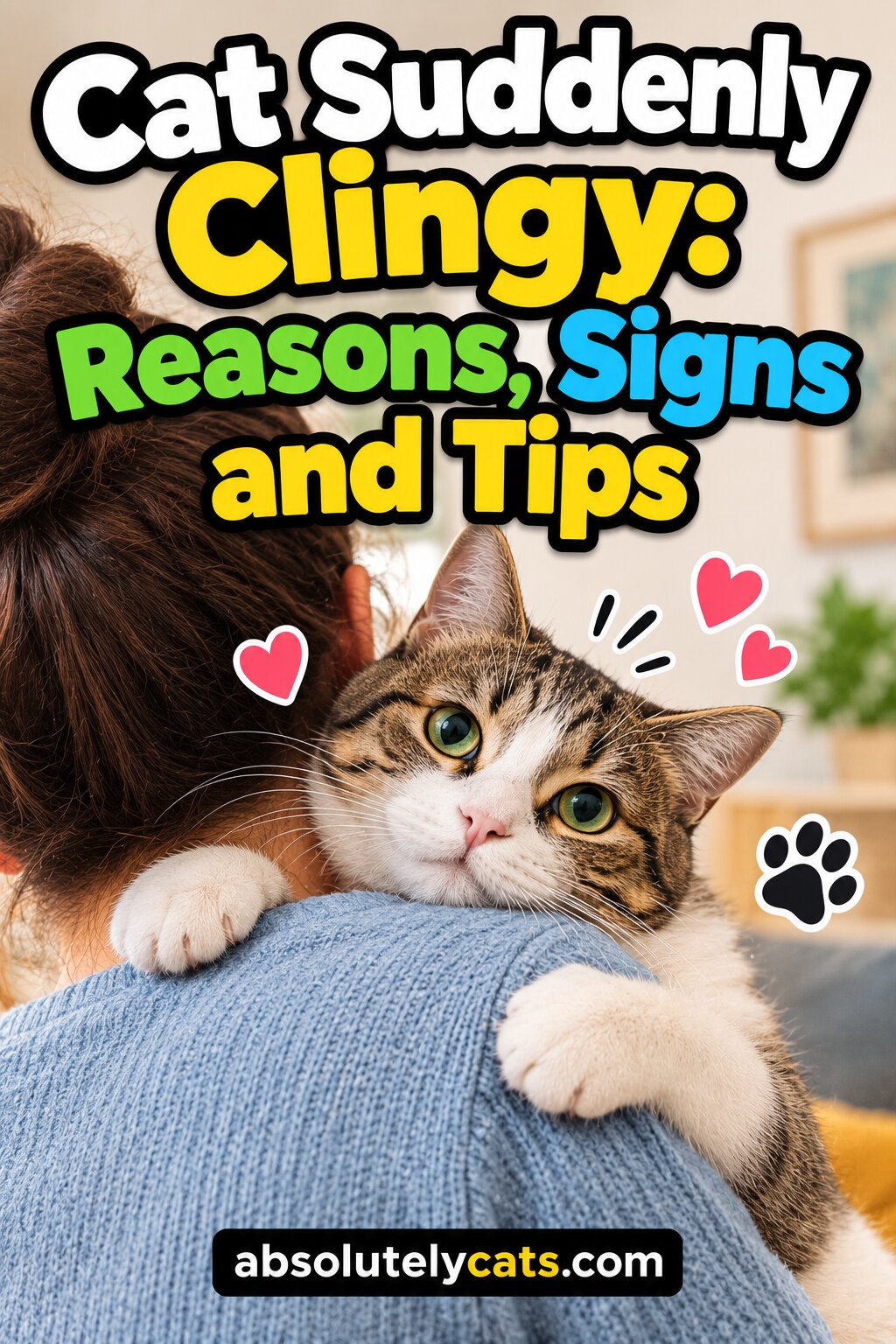
Has your independent cat suddenly started following you everywhere? Maybe your cat now sits on your lap constantly, cries when you leave a room, or wants attention throughout the day. If so, you may be wondering, “Why is my cat so clingy all of a sudden?”
A cat that suddenly becomes very clingy often tries to communicate something important. Sometimes the reason is harmless, such as a change in routine. However, in other cases, clinginess may signal stress, illness, aging, or emotional needs.
Understanding why your cat’s behavior changed can help you respond appropriately and keep your feline companion happy and healthy.
In this guide, we’ll explore the most common reasons cats become clingy, when you should worry, and what you can do to help.
Why Do Cats Become Clingy?
Cats usually enjoy a balance between social interaction and independence. While some breeds naturally seek more attention, a sudden change in behavior often has an underlying cause.
A clingy cat may:
- Follow you constantly
- Demand frequent petting
- Sleep beside you more often
- Vocalize excessively
- Become anxious when alone
- Refuse to leave your side
The key is identifying what changed before the clinginess started.
Cat Suddenly Becomes Very Clingy: Common Causes
When a cat suddenly becomes more attached than usual, several explanations may exist.
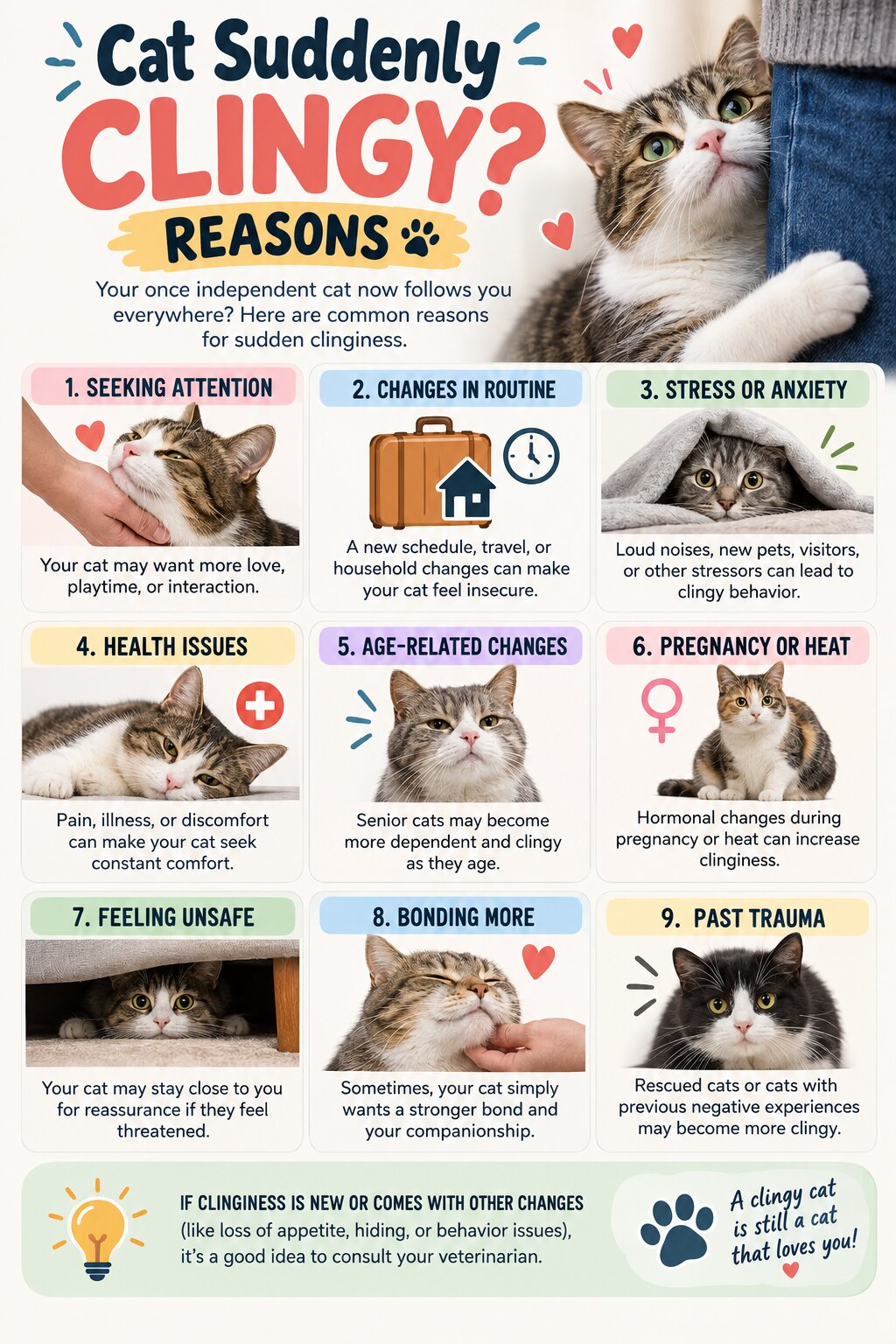
1. Changes in Routine
Cats thrive on routine.
Even small changes can affect their behavior.
Examples include:
- New work schedules
- Vacation returns
- Different feeding times
- Changes in sleeping arrangements
- Moving furniture
If your daily habits recently changed, your cat may seek reassurance through extra attention.
Fortunately, many cats adjust once a predictable routine returns.
2. Stress and Anxiety
Stress often causes clingy behavior.
Cats may become more dependent when they feel uncertain about their environment.
Common stress triggers include:
- Moving to a new home
- Renovations
- Loud noises
- New pets
- New family members
- Visitors staying in the house
In these situations, your presence provides comfort and security.
Therefore, your cat may remain close until the perceived threat disappears.
3. Illness or Pain
One of the most important reasons for sudden clinginess is illness.
Cats frequently hide physical discomfort. However, some cats become unusually affectionate when they feel unwell.
Health issues may include:
- Dental disease
- Arthritis
- Kidney disease
- Hyperthyroidism
- Infections
- Digestive problems
If clinginess appears suddenly and accompanies other symptoms, schedule a veterinary examination promptly.
Warning Signs to Watch For
Pay attention if clinginess occurs alongside:
- Reduced appetite
- Weight loss
- Vomiting
- Diarrhea
- Lethargy
- Changes in litter box habits
- Increased thirst
These signs may indicate an underlying medical problem.
4. Aging and Cognitive Changes
Elderly Cat Becoming More Needy
Many senior cats become more dependent on their owners.
As cats age, they may experience:
- Reduced vision
- Hearing loss
- Joint pain
- Cognitive decline
These changes can make older cats feel less confident.
Consequently, they may seek comfort from familiar people more often.
Older Cat Suddenly Clingy
If an older cat suddenly becomes clingy, age-related health conditions may play a role.
Senior cats sometimes develop:
- Dementia-like symptoms
- Anxiety
- Confusion
- Sleep disturbances
A veterinary evaluation can help identify the cause.
5. Pregnancy Detection and Hormonal Changes
Many cat owners believe cats can sense pregnancy.
Although scientific evidence remains limited, numerous owners report increased affection from cats during pregnancy.
Cats may react to:
- Hormonal changes
- Different scents
- Behavioral changes in owners
As a result, some cats become unusually attached during pregnancy.
6. Seeking Attention
Sometimes the explanation is simple.
Your cat may have learned that clingy behavior gets results.
If following you leads to:
- Petting
- Treats
- Playtime
- Food
your cat may repeat the behavior.
Cats quickly learn which actions receive rewards.
7. Boredom and Lack of Stimulation
Indoor cats require mental and physical stimulation.
Without enough enrichment, they may turn to their owners for entertainment.
Signs of boredom include:
- Excessive meowing
- Destructive behavior
- Overgrooming
- Clinginess
Adding enrichment often improves the situation.
Examples include:
- Puzzle feeders
- Cat trees
- Interactive toys
- Window perches
- Daily play sessions
8. Seasonal Changes
Weather can influence behavior.
During colder months, many cats become more affectionate.
Warm laps, blankets, and human body heat become attractive resources.
As temperatures drop, cats often seek additional closeness.
Why Are Cats So Clingy Sometimes?
Cats form strong emotional bonds with their caregivers.
Although people often describe cats as independent, many cats enjoy companionship.
Some breeds are naturally more affectionate.
Examples include:
- Ragdolls
- Siamese
- Burmese
- Maine Coons
- Tonkinese
These breeds often crave more interaction than others.
However, even independent cats may become clingy under certain circumstances.
My Cat Is Very Clingy: Is It Normal?
A naturally affectionate cat may simply enjoy human company.
Normal clinginess typically includes:
- Following owners occasionally
- Enjoying lap time
- Greeting owners at the door
- Sleeping nearby
This behavior usually isn’t concerning.
Problems arise when clinginess represents a sudden or dramatic change.
How Do You Know If a Cat Is Clingy?
Some signs clearly indicate clingy behavior.
Constant Following
The cat moves from room to room behind you.
Excessive Vocalization
Your cat cries or meows when separated from you.
Demanding Attention
The cat repeatedly seeks petting or interaction.
Separation Distress
The cat becomes upset when left alone.
Increased Physical Contact
Your cat constantly sits on you or beside you.
If these behaviors appear suddenly, investigate possible causes.
What Happens If a Cat Is Clingy?
In many cases, nothing serious happens.
A clingy cat simply seeks reassurance or companionship.
However, extreme clinginess may indicate:
- Stress
- Illness
- Anxiety
- Cognitive decline
Ignoring significant behavioral changes may delay diagnosis of an underlying issue.
Therefore, owners should pay attention to sudden personality shifts.
Can Cats Develop Separation Anxiety?
Yes.
Cats can develop separation-related problems.
Although separation anxiety is more common in dogs, cats experience it too.
Signs include:
- Excessive vocalization
- Destructive behavior
- Inappropriate urination
- Restlessness
- Overgrooming
These behaviors often occur when owners leave home.
What Causes Sudden Clinginess in Cats?
Several factors can trigger sudden clinginess.
Environmental Changes
Cats notice changes quickly.
Even subtle adjustments may affect them.
Health Issues
Pain and illness commonly cause behavioral changes.
Emotional Stress
Cats seek comfort when feeling anxious.
Aging
Senior cats often become more dependent.
Increased Attachment
Sometimes the human-animal bond simply grows stronger over time.
Understanding the specific cause helps determine the best solution.
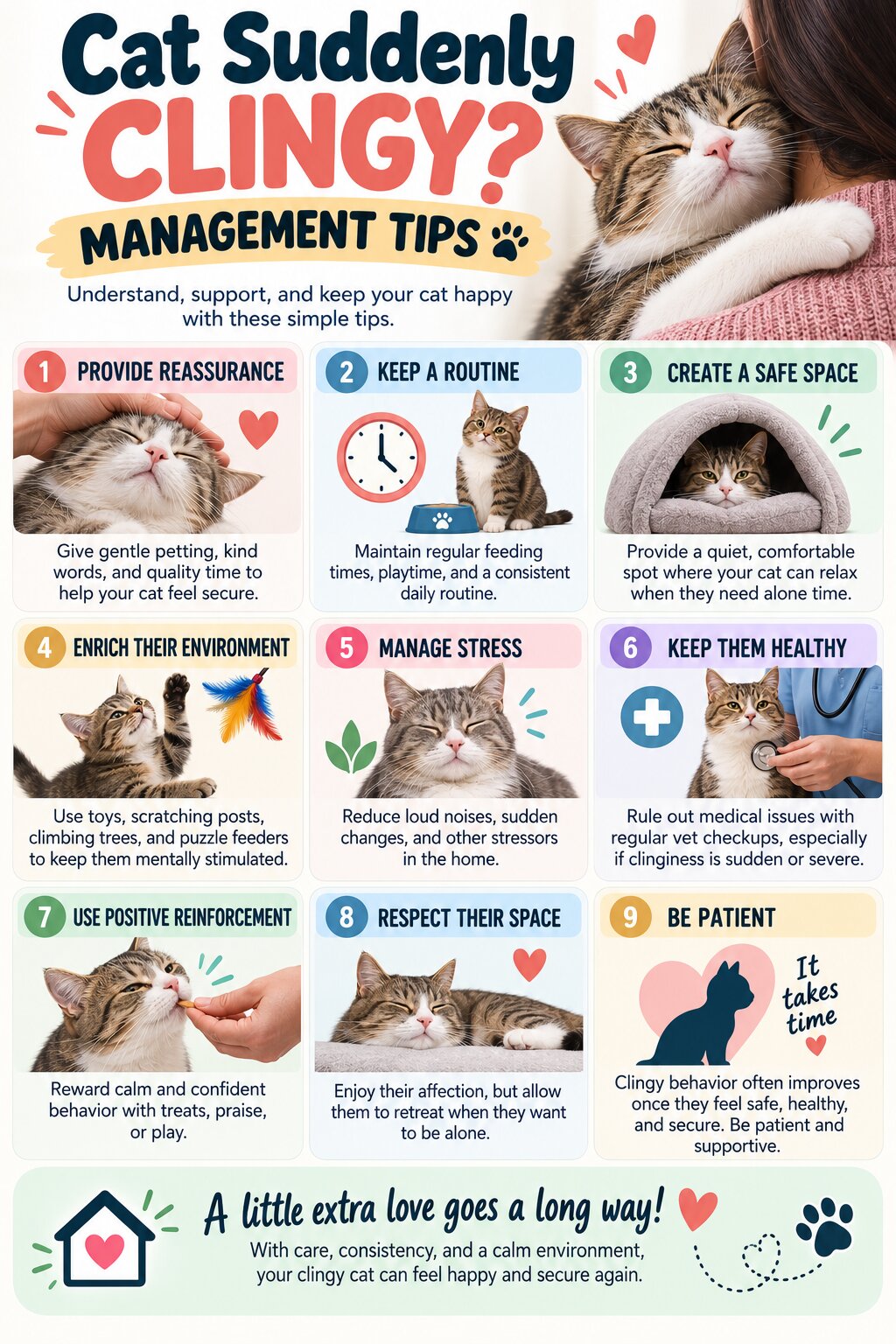
What Should I Do If My Cat Is Clingy?
The right response depends on the underlying reason.
Observe Behavior Carefully
Look for additional symptoms.
Pay attention to:
- Eating habits
- Energy levels
- Litter box behavior
- Sleeping patterns
These clues often reveal important information.
Maintain a Consistent Routine
Cats feel more secure when daily schedules remain predictable.
Try to keep:
- Feeding times consistent
- Play sessions regular
- Sleeping arrangements stable
Routine reduces stress significantly.
Increase Enrichment
Mental stimulation helps reduce boredom-driven clinginess.
Good options include:
- Food puzzles
- Interactive toys
- Climbing structures
- Bird-watching stations
Enrichment promotes independence and confidence.
Schedule a Veterinary Checkup
If clinginess appears suddenly, especially in older cats, consult a veterinarian.
Medical conditions often cause behavioral changes before physical symptoms appear.
Clinginess in Senior Cats
Senior cats deserve special attention.
Common Age-Related Causes
Older cats may become clingy due to:
- Arthritis
- Vision loss
- Hearing loss
- Cognitive dysfunction
- Chronic pain
These conditions can make familiar humans feel especially comforting.
Supporting an Older Clingy Cat
You can help by:
- Providing soft bedding
- Keeping routines stable
- Offering easy litter box access
- Scheduling regular veterinary visits
These adjustments improve comfort and confidence.
Can Stress Make a Cat More Affectionate?
Yes.
Many stressed cats seek extra comfort.
Unlike fearful cats that hide, some respond by becoming more affectionate.
This reaction often appears after:
- Thunderstorms
- Fireworks
- House guests
- Relocation
- Veterinary visits
The behavior usually decreases as stress levels return to normal.
When Should You Worry About a Clingy Cat?
Contact a veterinarian if clinginess occurs alongside:
- Appetite changes
- Weight loss
- Vomiting
- Diarrhea
- Difficulty walking
- Increased thirst
- Confusion
- Excessive sleeping
Behavioral changes often provide early warning signs of illness.
Therefore, sudden clinginess should never be dismissed completely.
Helping Your Cat Feel Secure
Cats thrive when they feel safe.
You can build security through:
Daily Play
Play reduces anxiety and boredom.
Predictable Feeding
Consistent meals create stability.
Safe Spaces
Provide quiet areas where your cat can retreat.
Positive Attention
Offer affection when your cat seeks interaction.
However, also encourage independent activities.
Balance remains important.
Helpful Resources
For more information about cat behavior and health:
These resources offer reliable guidance on feline behavior and wellness.
Final Thoughts
A cat that suddenly becomes clingy often tries to communicate something important. While some cats simply want more attention, sudden clinginess may also signal stress, boredom, aging, anxiety, or medical issues. The key is observing the behavior closely and looking for additional changes.
If your cat seems healthy and happy, extra affection may simply reflect a stronger bond. However, if clinginess appears suddenly or accompanies other symptoms, a veterinary examination can help rule out health concerns. By understanding the cause, you can provide the support and reassurance your cat needs.
Frequently Asked Questions
Why is my cat suddenly so clingy?
Changes in routine, stress, illness, aging, or boredom commonly cause sudden clinginess.
Is it normal for a cat to become clingy?
Yes. Some cats naturally become more affectionate, especially during stressful situations.
What causes sudden clinginess in cats?
Health issues, anxiety, environmental changes, and aging are common causes.
Can illness make a cat clingy?
Yes. Some cats become unusually affectionate when they feel sick or uncomfortable.
Why is my older cat suddenly clingy?
Senior cats may become clingy due to cognitive changes, pain, vision loss, or hearing decline.
How do I know if my cat is clingy?
Clingy cats often follow owners constantly and seek frequent attention.
Should I ignore a clingy cat?
No. First determine the cause before changing your response.
Can stress make cats clingy?
Yes. Many cats seek comfort and security from trusted humans during stressful events.
What should I do if my cat is very clingy?
Maintain routines, provide enrichment, and schedule a veterinary visit if the behavior is sudden.
When should I take a clingy cat to the vet?
Visit a veterinarian if clinginess occurs with appetite changes, weight loss, lethargy, or other symptoms.

Tammy is the passionate cat enthusiast behind Absolutely Cats. Her journey began with a childhood filled with furry companions, leading her to advocate for cat well-being and a connoisseur of all things feline. Tammy’s dedication to the world of cats is evident in every article, guide, and review she pens.