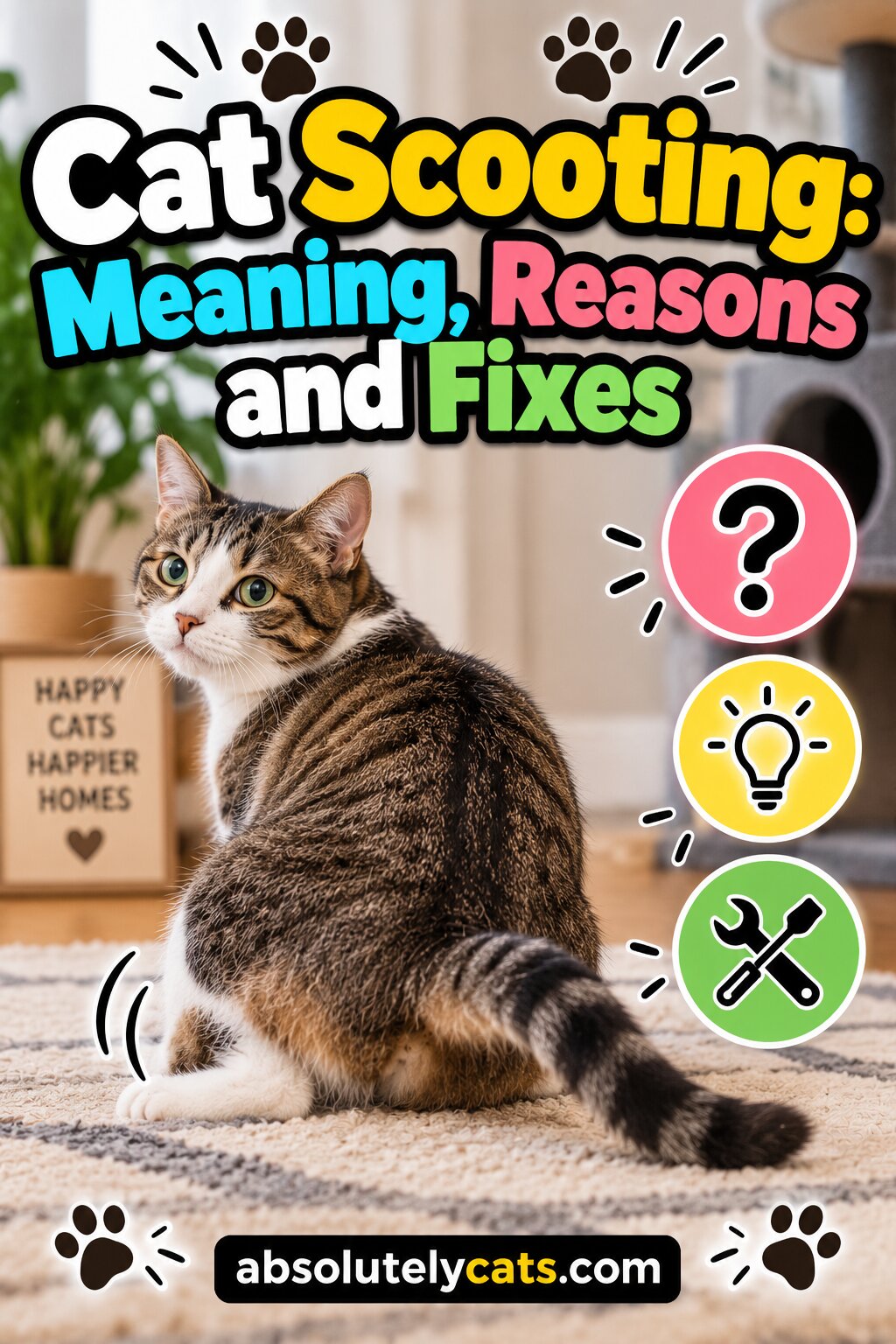
Have you ever seen your cat suddenly drag its bottom across the carpet, floor, or rug after using the litter box? This unusual behavior, commonly called cat scooting, often leaves owners confused and concerned.
While an occasional scoot may simply mean something is stuck to your cat’s fur, repeated scooting can signal irritation, digestive problems, parasites, or medical conditions that need attention.
If your cat is scooting on the floor after pooping, understanding the possible causes can help you determine whether the problem is minor or requires veterinary care.
In this guide, we’ll explain why cats scoot, what causes butt dragging, how to stop it, and when it’s time to call the veterinarian.
What Is Cat Scooting?
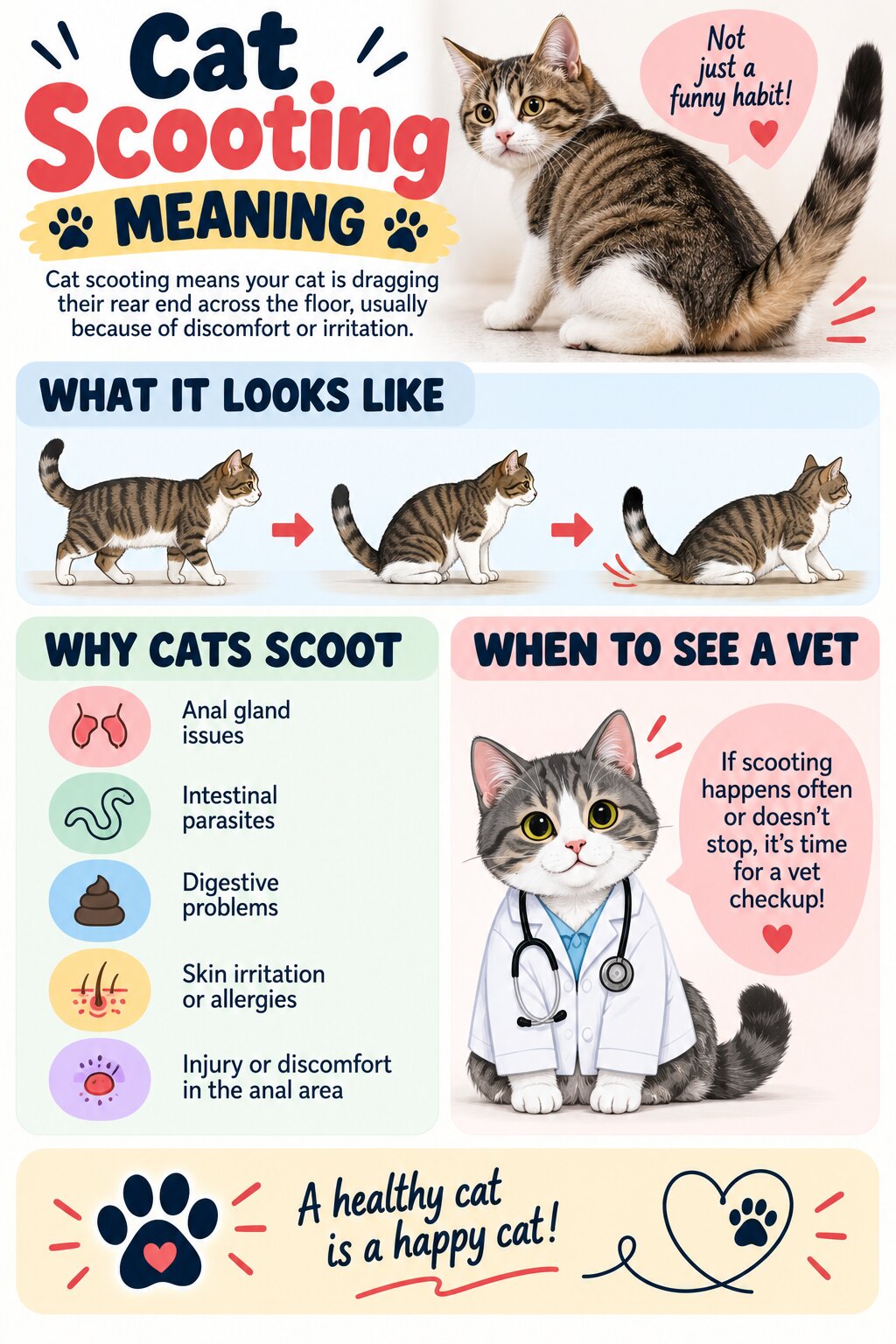
Cat scooting occurs when a cat drags its rear end across the floor while using its front legs to move forward.
Owners may notice their cat:
- Dragging its bum across carpet
- Scooting across tile floors
- Rubbing its rear on rugs
- Sliding across rough surfaces
- Immediately scooting after using the litter box
This behavior usually indicates irritation, discomfort, or something stuck around the anal area.
Why Does My Cat Scoot?
Cats scoot because something around their rear end feels uncomfortable.
The sensation may result from:
- Feces stuck to fur
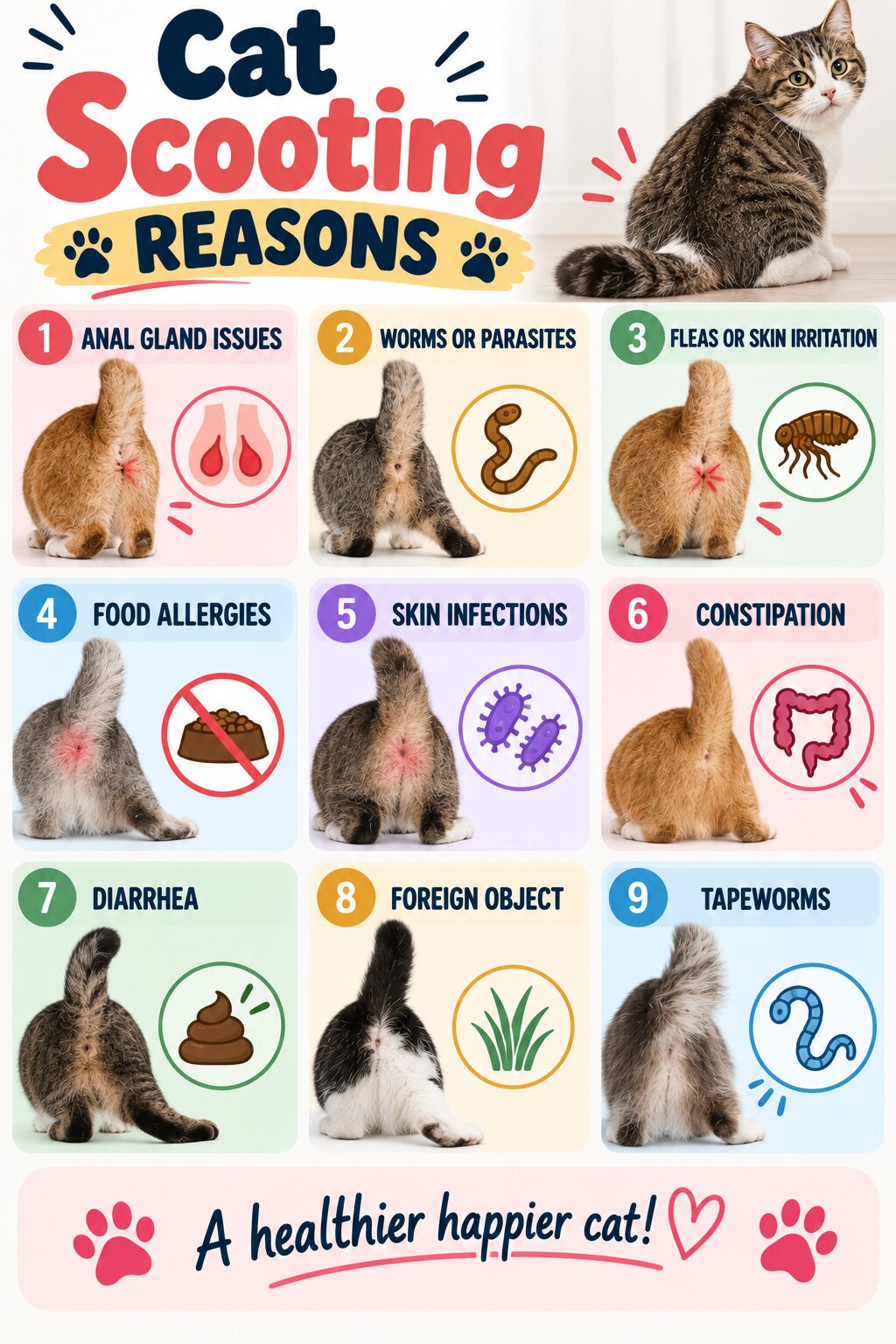
- Anal gland issues
- Parasites
- Skin irritation
- Digestive problems
- Allergies
- Infections
In most cases, scooting is your cat’s attempt to relieve discomfort.
Cat Scooting After Poop: The Most Common Causes
Many owners specifically notice scooting immediately after bowel movements.
Let’s examine the most common reasons.
1. Feces Stuck to Fur
This is one of the most frequent causes.
Long-haired cats are especially prone to this problem.
Small amounts of stool may cling to:
- Rear fur
- Tail fur
- The area around the anus
The cat then drags its rear to remove the debris.
Signs
- Scooting occurs immediately after pooping.
- Visible fecal material may be present.
- The cat otherwise appears healthy.
Fix
Regular grooming and trimming excess fur around the rear area often help.
2. Dirty Rear End
Sometimes soft stool leaves residue behind.
Even if no visible feces remain, lingering moisture or irritation may trigger scooting.
This commonly occurs after:
- Mild diarrhea
- Digestive upset
- Dietary changes
Cleaning the area gently can often resolve the issue.
3. Anal Gland Problems
Although less common in cats than dogs, anal gland issues can occur.
Anal glands are small sacs located beside the anus.
Normally, bowel movements empty these glands naturally.
However, glands may become:
- Impacted
- Inflamed
- Infected
This irritation frequently causes scooting.
Additional Signs
- Excessive licking under the tail
- Swelling near the anus
- Strong odor
- Pain during defecation
Veterinary treatment is often necessary.
4. Intestinal Parasites
Worms commonly cause rear-end irritation.
Tapeworms are particularly associated with scooting.
Cats may become infected through:
- Fleas
- Hunting rodents
- Outdoor exposure
Symptoms
- Scooting
- Weight loss
- Increased appetite
- Visible worm segments near the anus
Fortunately, deworming medications are usually effective.
5. Allergies
Allergies can affect the skin around the rear end.
Common triggers include:
- Food allergies
- Environmental allergens
- Flea allergies
Inflammation and itching often lead to scooting.
Other Signs
- Excessive grooming
- Itchy skin
- Ear infections
- Hair loss
Managing the underlying allergy often resolves the problem.
6. Diarrhea or Digestive Problems
Loose stool frequently irritates the anal region.
When cats experience diarrhea, they may drag their rear afterward.
Common causes include:
- Dietary changes
- Food intolerance
- Infections
- Stress
Treating the digestive issue typically reduces scooting.
7. Constipation
Constipation can also trigger scooting.
Hard stool may cause:
- Straining
- Irritation
- Incomplete evacuation
As a result, the cat may attempt to relieve discomfort by dragging its rear.
8. Skin Irritation
The skin around the anus can become irritated due to:
- Excess moisture
- Allergies
- Grooming issues
- Infections
Persistent itching often leads to scooting behavior.
Cat Dragging Bum on Floor After Poop
When scooting occurs immediately after defecation, the cause often involves:
Residual Stool
The cat feels something stuck and tries to remove it.
Irritation
Recent bowel movements may temporarily irritate sensitive tissue.
Anal Gland Discomfort
Pressure during defecation may make anal gland problems more noticeable.
Occasional scooting after pooping is usually less concerning than frequent scooting throughout the day.
Cat Scooting on Floor After Poop
Many owners notice scooting on hard surfaces such as:
- Tile
- Hardwood
- Laminate
- Concrete
Cats may choose these surfaces because they provide friction and relief.
However, the surface itself does not cause the behavior.
Instead, the cat uses it to address discomfort.
Cat Scooting on Carpet
Carpet offers greater friction than smooth flooring.
As a result, many cats prefer scooting on:
- Rugs
- Carpets
- Mats
Although effective from the cat’s perspective, this behavior often leaves unpleasant stains behind.
If carpet scooting becomes frequent, investigate the underlying cause.
Cat Scooting on Rough Floor
Some cats specifically seek rough surfaces.
The texture may provide stronger relief from itching or irritation.
Examples include:
- Concrete patios
- Textured flooring
- Outdoor surfaces
Repeated scooting on rough materials may eventually cause skin damage.
Why Is My Cat Scooting Outside the Litter Box?
Many cats leave the litter box before scooting.
This behavior often occurs because:
- They feel immediate discomfort.
- They want a rougher surface.
- They are attempting to clean themselves.
The scooting itself usually does not indicate a litter box problem.
Instead, it reflects irritation around the rear end.
How Do You Know if Scooting Is Serious?
Occasional scooting may not indicate a major problem.
However, repeated scooting deserves attention.
Mild Cases
Typically involve:
- Temporary stool residue
- Minor irritation
- Isolated episodes
More Serious Cases
May involve:
- Parasites
- Anal gland disease
- Allergies
- Infection
- Gastrointestinal disorders
Frequency often provides an important clue.
Signs You Should Call a Veterinarian
Seek veterinary advice if you notice:
- Frequent scooting
- Blood around the anus
- Swelling
- Strong odor
- Difficulty defecating
- Weight loss
- Diarrhea lasting more than a day
- Excessive licking
These signs suggest a medical issue requiring evaluation.
How Veterinarians Diagnose Cat Scooting
A veterinarian may perform:
Physical Examination
The rear end is checked for:
- Irritation
- Injury
- Swelling
Fecal Testing
Testing identifies:
- Worms
- Parasites
- Intestinal infections
Anal Gland Assessment
The veterinarian checks for impaction or infection.
Allergy Evaluation
Chronic cases may require allergy investigation.
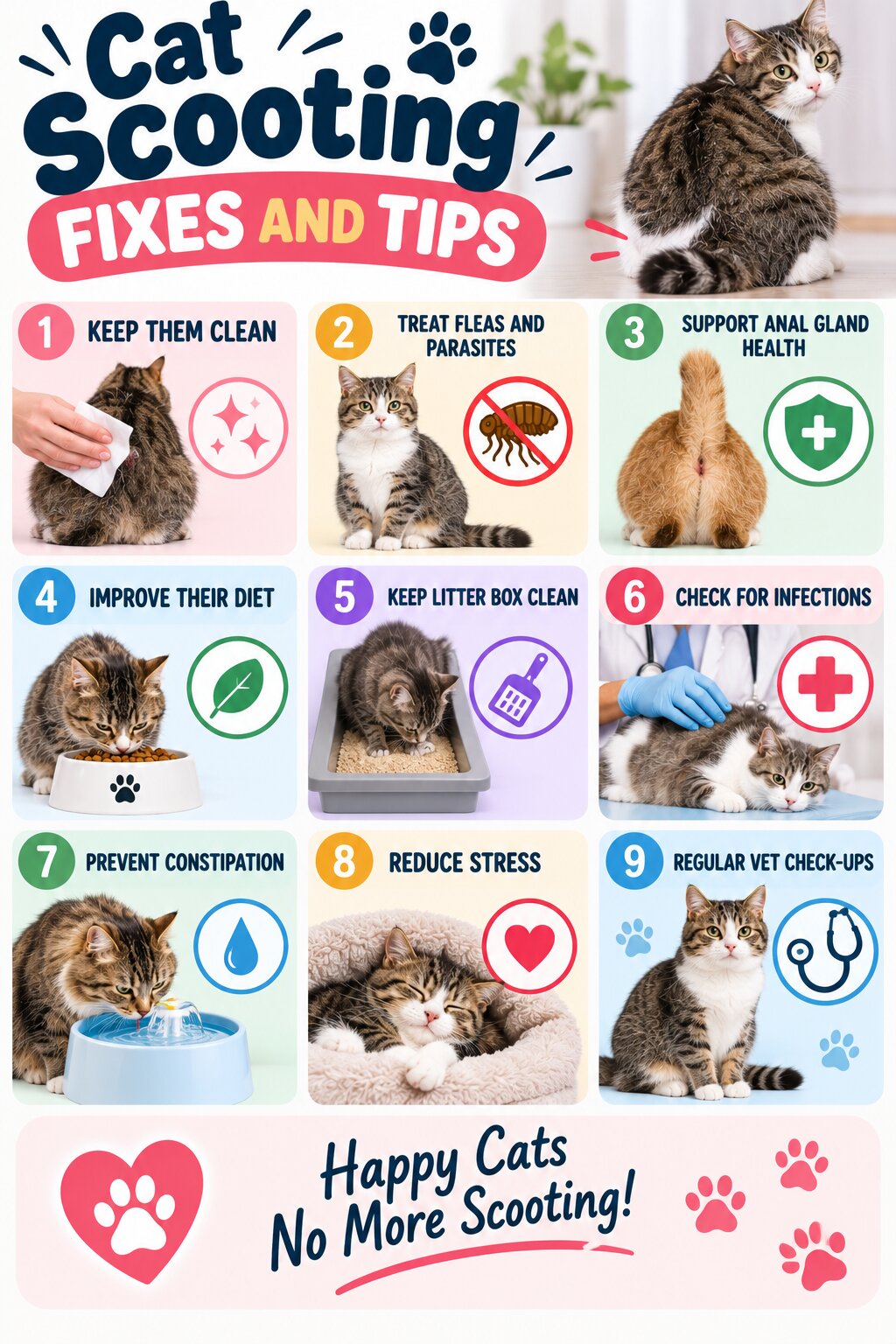
How to Stop Cat Scooting
Treatment depends on the underlying cause.
Improve Grooming
Long-haired cats often benefit from:
- Regular brushing
- Hygiene trims
- Rear-end cleaning
Maintain Parasite Prevention
Year-round flea prevention reduces parasite risks.
Feed a Balanced Diet
Proper nutrition supports healthy digestion.
Address Allergies
Work with your veterinarian to identify triggers.
Treat Medical Problems Promptly
Resolving the underlying condition usually eliminates scooting.
Home Care Tips
You can help your cat by:
Checking the Rear Area
Look for:
- Stool residue
- Redness
- Swelling
Keeping Fur Trimmed
Especially around the anus.
Monitoring Stool Quality
Healthy stools should be:
- Firm
- Well-formed
- Easy to pass
Watching for Behavioral Changes
Additional symptoms often provide clues about the cause.
Common Myths About Cat Scooting
Myth 1: Scooting Always Means Worms
Parasites are one possibility, but many other causes exist.
Myth 2: Cats Never Have Anal Gland Problems
Although less common than in dogs, cats can develop anal gland issues.
Myth 3: One Scoot Means a Veterinary Emergency
Occasional scooting is often harmless.
Repeated scooting deserves more attention.
Myth 4: Indoor Cats Cannot Get Parasites
Indoor cats can still become infected through fleas or contaminated environments.
Helpful Resources
For additional information on feline health and digestive issues:
These resources provide reliable guidance on cat health and behavior.
Final Thoughts
Cat scooting after poop often happens because something around the rear end feels uncomfortable. In many cases, stool stuck to fur or mild irritation causes the behavior. However, parasites, allergies, digestive problems, and anal gland issues can also contribute.
While an occasional scoot is usually not alarming, frequent butt dragging should never be ignored. By identifying the underlying cause and seeking veterinary care when necessary, you can keep your cat comfortable, healthy, and free from ongoing irritation.
Frequently Asked Questions
Why does my cat scoot after pooping?
The most common reasons include stool stuck to fur, irritation, parasites, or anal gland issues.
Is cat scooting normal?
Occasional scooting may be normal, but repeated scooting usually indicates discomfort.
Why is my cat dragging its bum on the floor?
Cats drag their rear to relieve itching, irritation, or discomfort around the anus.
Can worms cause scooting?
Yes. Tapeworms and other parasites commonly cause anal irritation.
Why does my cat scoot on carpet?
Carpet provides friction that may help relieve discomfort.
Can allergies cause scooting?
Yes. Allergies can create itching and inflammation around the rear end.
Do cats have anal glands?
Yes. Cats have anal glands that can occasionally become impacted or infected.
Should I worry if my cat scoots once?
One isolated episode is usually not serious.
When should I take my cat to the vet for scooting?
Visit a veterinarian if scooting becomes frequent or occurs with other symptoms.
How can I stop my cat from scooting?
Treat the underlying cause, maintain grooming, and seek veterinary care if symptoms persist.

Tammy is the passionate cat enthusiast behind Absolutely Cats. Her journey began with a childhood filled with furry companions, leading her to advocate for cat well-being and a connoisseur of all things feline. Tammy’s dedication to the world of cats is evident in every article, guide, and review she pens.