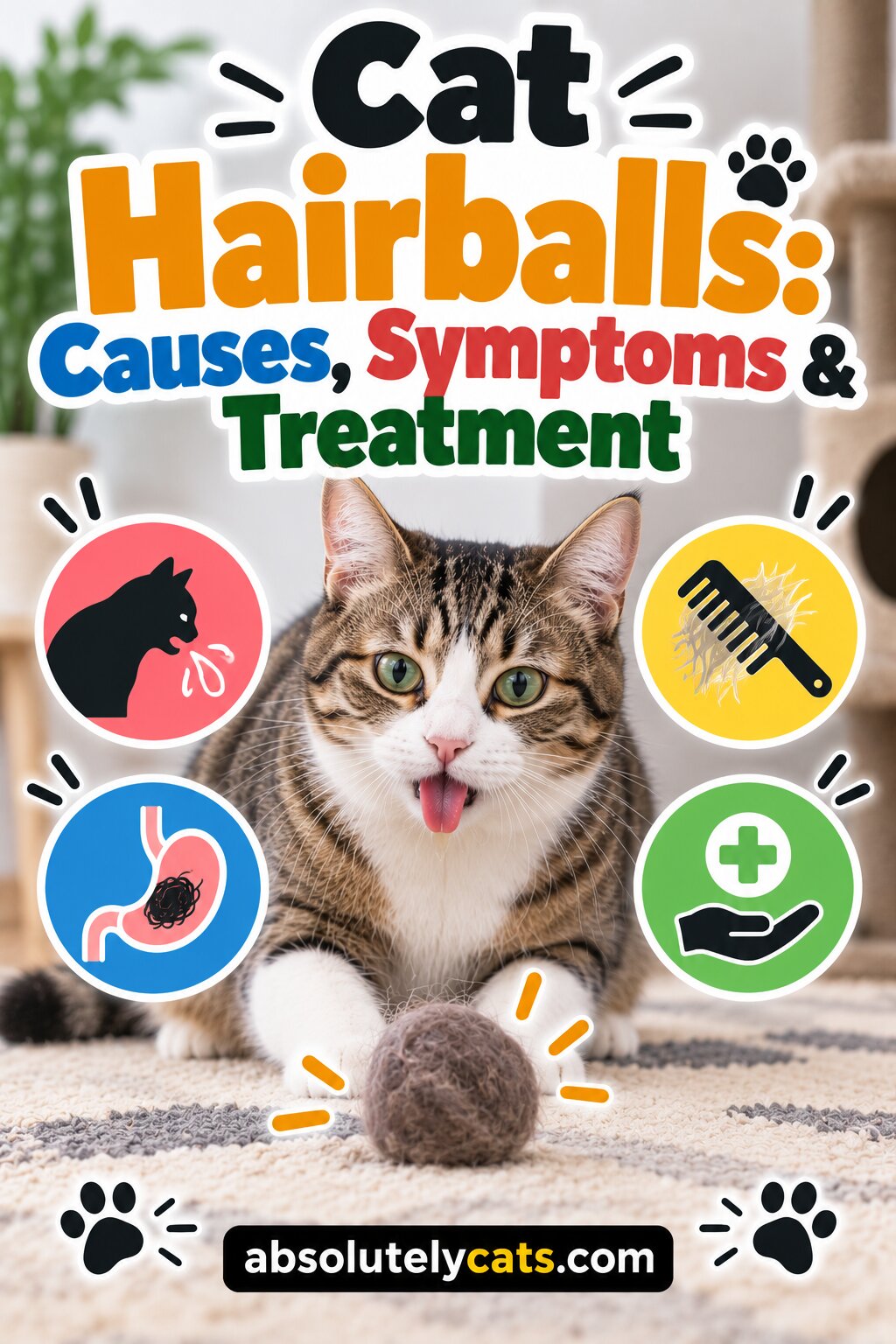
Most cat owners have witnessed it at least once. Your cat starts coughing, gagging, or retching, and then deposits a wet tube of fur on the floor. While hairballs are common in cats, frequent hairballs are not always normal.
Understanding why hairballs form, what symptoms they cause, and how to prevent them can help keep your cat comfortable and healthy.
In this guide, you’ll learn everything you need to know about cat hairballs, including causes, treatment options, warning signs, and prevention strategies.
What Are Cat Hairballs?
A hairball, also called a trichobezoar, is a collection of fur that accumulates in a cat’s digestive tract.
Cats groom themselves by licking their coats. Their tongues contain tiny backward-facing barbs that catch loose hair.
Most swallowed hair passes through the digestive system and exits in the stool. However, some hair remains in the stomach and gradually forms a hairball.
Eventually, the cat vomits the hairball to remove it.
What Does a Cat Hairball Look Like?
Many people expect hairballs to look round.
However, cat hairballs usually appear:
- Long and tube-shaped
- Wet and slimy
- Dark brown or black
- Mixed with stomach fluids
The hairball becomes cylindrical as it passes through the esophagus.
Why Do Cats Get Hairballs?
Hairballs develop when cats swallow more hair than their digestive systems can handle.
Several factors increase the likelihood of hairball formation.
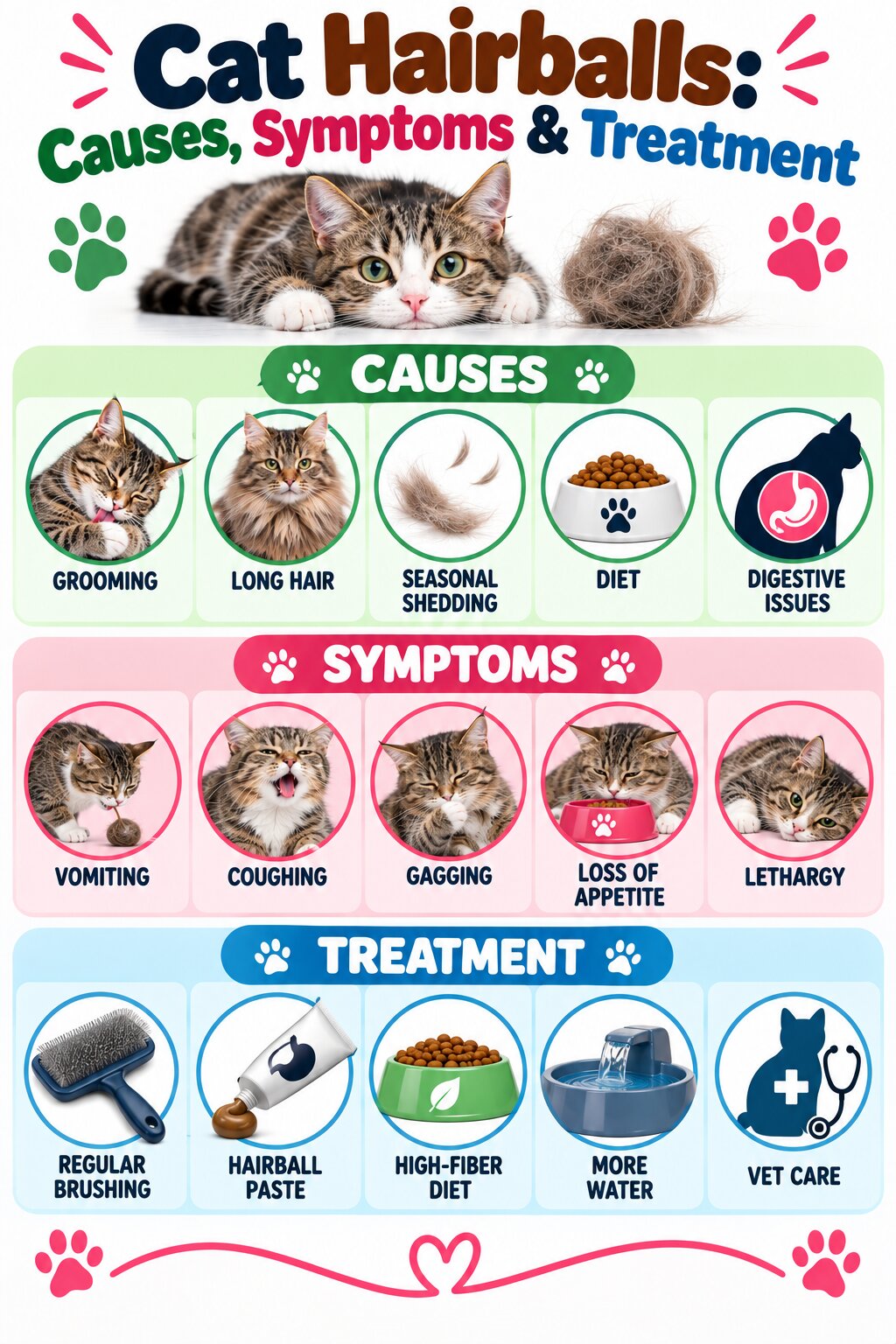
1. Frequent Grooming
Cats spend a large part of the day grooming.
The more grooming a cat performs, the more hair it swallows.
2. Long-Haired Breeds
Long-haired cats are more prone to hairballs.
Examples include:
- Persian
- Maine Coon
- Ragdoll
- Himalayan
- Norwegian Forest Cat
These breeds naturally ingest larger amounts of fur.
3. Seasonal Shedding
Hairballs often become more common during shedding seasons.
Spring and fall typically bring increased fur loss.
Consequently, cats swallow more loose hair while grooming.
4. Overgrooming
Cats that groom excessively may develop frequent hairballs.
Common causes of overgrooming include:
- Stress
- Allergies
- Skin irritation
- Parasites
- Anxiety
Addressing the underlying cause can reduce hairball formation.
5. Skin Conditions
Itchy skin often leads to increased grooming.
Common causes include:
- Fleas
- Food allergies
- Environmental allergies
- Skin infections
More grooming means more swallowed hair.
Common Hairball Symptoms
Many cats show predictable signs before producing a hairball.
Retching
Repeated gagging is one of the most common symptoms.
Coughing
Hairballs sometimes resemble coughing episodes.
Hacking Sounds
Cats may make loud retching noises while attempting to expel a hairball.
Vomiting Fur
The eventual appearance of a hairball confirms the cause.
Temporary Appetite Changes
Some cats eat less until the hairball passes.
Hairball vs Vomiting: What’s the Difference?
Hairballs and ordinary vomiting can appear similar.
However, important differences exist.
Hairball Vomiting
Usually includes:
- Visible fur
- Retching beforehand
- Tubular hair mass
Regular Vomiting
May contain:
- Food
- Foam
- Bile
- Liquid
Without visible hair.
Frequent vomiting without hairballs may indicate another health issue.
Are Hairballs Normal?
Occasional hairballs are generally considered normal.
Many healthy cats produce:
- One hairball every few months
- Occasional seasonal hairballs
However, frequent hairballs deserve attention.
When Hairballs Become Excessive
Consult your veterinarian if your cat:
- Produces multiple hairballs monthly
- Vomits frequently
- Loses weight
- Experiences appetite changes
These signs may indicate an underlying problem.
Can Hairballs Be Dangerous?
Most hairballs pass without complications.
However, large hairballs can occasionally create digestive blockages.
A blockage is a medical emergency.
Warning Signs of a Hairball Blockage
Watch for:
- Repeated unproductive retching
- Loss of appetite
- Lethargy
- Constipation
- Diarrhea
- Abdominal pain
- Vomiting without producing a hairball
Immediate veterinary care is necessary if these symptoms occur.
Cat Hairball Coughing vs Asthma
Hairball episodes sometimes resemble respiratory problems.
Hairball Episode
Usually includes:
- Gagging
- Retching
- Vomiting
Asthma Attack
Often involves:
- Wheezing
- Open-mouth breathing
- Persistent coughing
Cats with respiratory symptoms should be evaluated by a veterinarian.
Why Is My Cat Gagging but No Hairball Comes Out?
Occasional unsuccessful retching may occur.
However, repeated gagging without producing a hairball can indicate:
- Hairball blockage
- Asthma
- Respiratory disease
- Foreign object ingestion
Veterinary evaluation is recommended if symptoms continue.
How Veterinarians Diagnose Hairball Problems
Most routine hairballs do not require testing.
However, frequent or severe cases may require evaluation.
Diagnostic options include:
Physical Examination
Your veterinarian checks overall health and digestive function.
X-rays
Imaging helps detect:
- Blockages
- Foreign objects
- Digestive abnormalities
Ultrasound
Ultrasound may identify stomach or intestinal issues.
Blood Tests
Blood work helps rule out underlying diseases.
Cat Hairball Treatment
Treatment depends on severity and frequency.
1. Hairball Remedies
Hairball products often contain lubricants that help swallowed fur move through the digestive tract.
These products may be available as:
- Gels
- Pastes
- Chews
Always follow veterinary recommendations.
2. Increased Grooming
Regular brushing removes loose fur before your cat swallows it.
This is one of the most effective prevention methods.
3. Dietary Changes
Many hairball-control foods contain:
- Additional fiber
- Digestive support ingredients
Fiber helps move swallowed hair through the intestines.
4. Improve Hydration
Hydration supports healthy digestion.
Encourage water intake through:
- Fresh water bowls
- Cat fountains
- Wet food diets
5. Treat Underlying Conditions
If overgrooming contributes to hairballs, your veterinarian may address:
- Allergies
- Fleas
- Anxiety
- Skin disease
Treating the root cause often reduces hairballs significantly.
How to Prevent Hairballs
Prevention is usually easier than treatment.
Brush Your Cat Regularly
Frequency depends on coat type.
Long-haired cats often benefit from daily brushing.
Feed a High-Quality Diet
Good nutrition supports healthy skin and coat condition.
Encourage Hydration
Adequate water intake improves digestive movement.
Reduce Stress
Stress-related grooming can increase hairball formation.
Schedule Routine Veterinary Care
Regular exams help identify problems early.
Hairballs in Kittens
Kittens can develop hairballs, although they occur less frequently than in adults.
As kittens mature and groom more often, hairball production may increase.
Persistent vomiting in kittens should always be evaluated promptly.
Hairballs in Senior Cats
Older cats sometimes experience more hairball problems.
Possible reasons include:
- Reduced digestive efficiency
- Increased grooming
- Underlying disease
Any change in hairball frequency deserves attention in senior cats.
Common Myths About Cat Hairballs
Myth 1: Frequent Hairballs Are Normal
Occasional hairballs are normal. Frequent hairballs often indicate a problem.
Myth 2: Long-Haired Cats Always Have Hairballs
Many long-haired cats rarely develop hairballs with proper grooming.
Myth 3: Hairballs Are Harmless
Most are harmless, but some can cause dangerous blockages.
Myth 4: Vomiting Means a Hairball
Many illnesses cause vomiting without involving hairballs.
When to See a Veterinarian
Contact your veterinarian if your cat:
- Produces frequent hairballs
- Stops eating
- Appears lethargic
- Experiences repeated retching
- Has constipation
- Vomits repeatedly
- Shows abdominal discomfort
Prompt treatment prevents complications.
Final Thoughts
Hairballs are a common part of cat ownership, but frequent hairballs should never be ignored. Most hairballs result from swallowed fur during normal grooming. However, excessive grooming, skin conditions, allergies, and digestive problems can increase their frequency.
Regular brushing, proper nutrition, adequate hydration, and prompt treatment of underlying health issues can significantly reduce hairball formation. If your cat develops frequent hairballs, repeated vomiting, or signs of a blockage, seek veterinary care as soon as possible.
Frequently Asked Questions
What causes hairballs in cats?
Hairballs form when swallowed fur accumulates in the digestive tract.
Are hairballs normal?
Occasional hairballs are normal, but frequent hairballs are not.
How often should a cat have a hairball?
Many healthy cats only produce a hairball every few months.
Can hairballs cause a blockage?
Yes. Large hairballs can occasionally block the digestive tract.
Why is my cat gagging but not producing a hairball?
This may indicate a blockage, asthma, or another medical issue.
Do long-haired cats get more hairballs?
Yes. Long-haired breeds generally swallow more fur.
How can I prevent hairballs?
Regular brushing, hydration, and appropriate diets help reduce hairballs.
Are hairball remedies safe?
Many veterinarian-approved products are safe when used correctly.
Can kittens get hairballs?
Yes, although they occur less frequently than in adult cats.
When should I take my cat to the vet for hairballs?
Seek veterinary care for frequent hairballs, repeated retching, or signs of illness.

Tammy is the passionate cat enthusiast behind Absolutely Cats. Her journey began with a childhood filled with furry companions, leading her to advocate for cat well-being and a connoisseur of all things feline. Tammy’s dedication to the world of cats is evident in every article, guide, and review she pens.