Few things worry cat owners more than seeing their cat eat a meal and then vomit it back up shortly afterward. Whether your cat throws up wet food, dry food, grass, treats, or even water, understanding the cause is important.
Occasional vomiting after eating may result from something as simple as eating too fast. However, frequent vomiting, especially when it involves undigested food, can sometimes indicate a medical problem that requires veterinary attention.
This guide explains why cat throwing up after eating, how to tell the difference between harmless vomit and serious causes, and what you can do to help.
Is It Normal for Cats to Throw Up After Eating?
An occasional vomiting episode is fairly common in cats.
However, frequent vomiting is not considered normal.
A healthy cat should generally be able to eat and digest meals without repeatedly vomiting.
If your cat throws up once and then returns to normal behavior, the cause may be minor. If vomiting occurs regularly, an underlying issue may be present.
Vomiting vs Regurgitation: Understanding the Difference
Many owners use the vomiting and regurgitation terms interchangeably, but they are different.
Vomiting
Vomiting involves active stomach contractions.
Before vomiting, a cat may:
- Gag
- Retch
- Drool
- Appear nauseated
The material often contains partially digested food, liquid, or bile.
Regurgitation
Regurgitation occurs without stomach contractions.
Food comes back up shortly after eating.
Regurgitated material usually appears:
- Undigested
- Tube-shaped
- Similar to how it looked when swallowed
Distinguishing between the two helps veterinarians identify the cause.
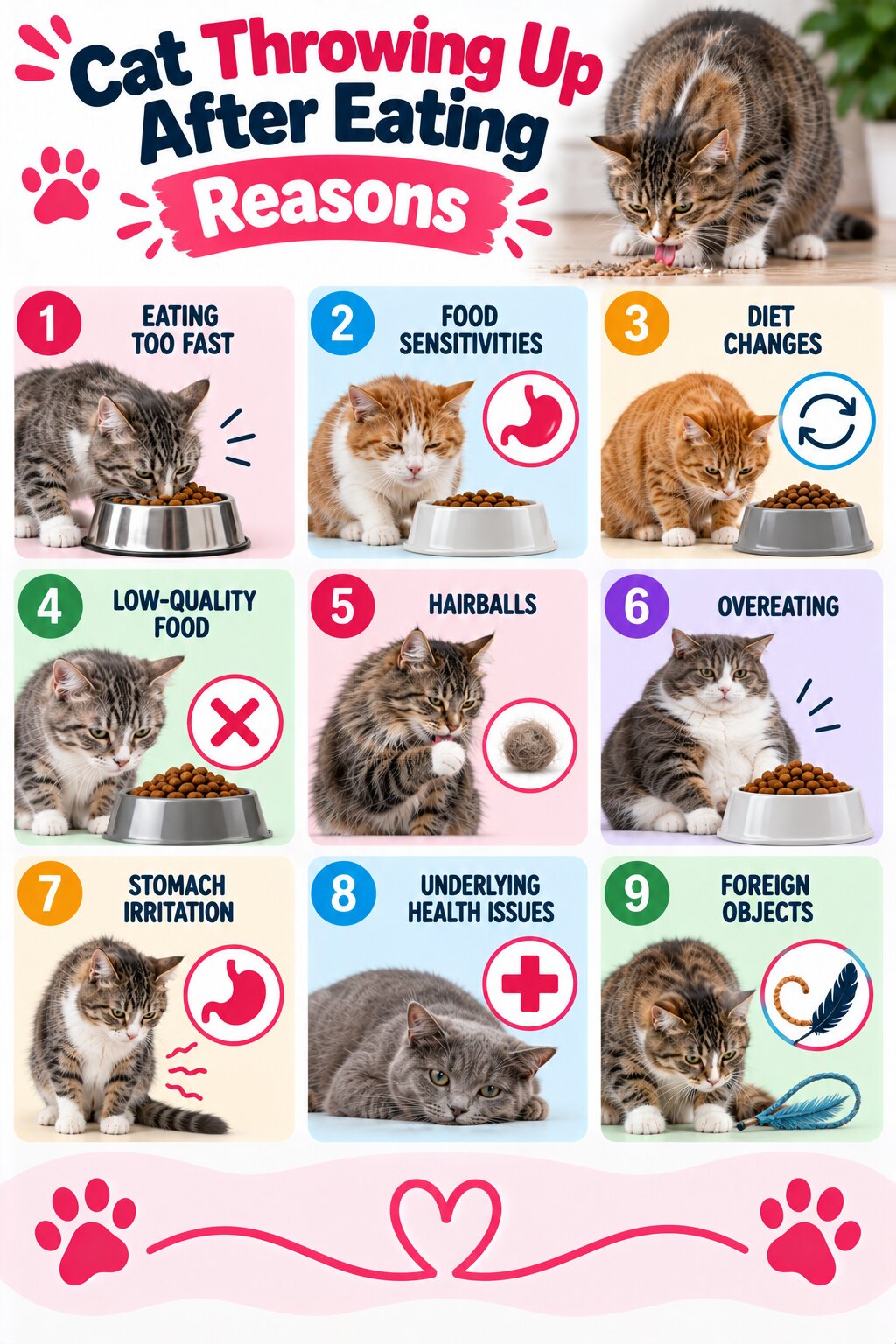
Why Does My Cat Throw Up After Eating?
Several factors can cause vomiting after meals.
Some are relatively harmless, while others require medical evaluation.
1. Eating Too Fast
One of the most common causes is eating too quickly.
When cats gulp food rapidly:
- They swallow excess air.
- The stomach expands quickly.
- Food may come back up before digestion begins.
This often results in vomiting undigested food shortly after a meal.
Why Cats Vomit from Eating Too Fast
Fast eaters frequently:
- Compete with other pets
- Experience food insecurity
- Become overly excited about meals
The stomach struggles to handle the sudden intake.
Consequently, food may be expelled almost immediately.
Signs of Fast-Eating Vomit
- Occurs within minutes of eating
- Food appears mostly undigested
- Cat acts normal afterward
- No ongoing illness signs
Strategies to Slow Down Eating
Fortunately, several solutions work well.
Use Puzzle Feeders
Puzzle feeders encourage slower eating.
The cat must work to access food gradually.
Offer Smaller Meals
Divide daily food into:
- Three meals
- Four meals
- Multiple smaller portions
Smaller meals reduce stomach overload.
Use Slow-Feed Bowls
Specially designed bowls make it difficult to gulp food quickly.
Separate Multiple Pets
Competition often encourages fast eating.
Providing separate feeding spaces may help.
2. Cat Throwing Up After Eating Wet Food
Some cats vomit specifically after eating canned food.
Possible reasons include:
Eating Too Quickly
Soft food is easy to consume rapidly.
Food Intolerance
Certain ingredients may upset the digestive system.
Sudden Diet Changes
Switching brands abruptly can trigger vomiting.
Gradual transitions over 7–10 days usually help.
3. Cat Throwing Up After Eating Dry Food
Dry food can also cause vomiting.
Common reasons include:
Rapid Consumption
Kibble may be swallowed whole.
Expansion in the Stomach
Some dry foods absorb moisture and expand after ingestion.
Food Sensitivity
Certain ingredients may trigger digestive upset.
4. Cat Throwing Up Undigested Food
Undigested food suggests the meal did not remain in the stomach long enough for digestion.
Possible causes include:
- Eating too fast
- Regurgitation
- Esophageal disorders
- Digestive disease
Occasional episodes may not be concerning.
Daily occurrences warrant veterinary evaluation.
Cat Vomiting Undigested Food Daily
Daily vomiting should never be considered normal.
Potential causes include:
- Inflammatory bowel disease
- Food allergies
- Esophageal disorders
- Intestinal disease
- Chronic gastritis
Veterinary testing is often necessary.
5. Cat Throws Up After Eating Grass
Many cats enjoy chewing grass.
Grass may irritate the stomach lining and trigger vomiting.
In fact, some experts believe cats intentionally eat grass to induce vomiting.
Occasional grass-related vomiting is usually not alarming.
However, frequent vomiting deserves investigation.
6. Cat Throws Up After Eating Normal Food
Sometimes a cat vomits despite eating the same food for years.
Possible explanations include:
- Developing food intolerance
- Hairballs
- Digestive disease
- Chronic illness
Age-related health changes should also be considered.
7. Cat Throws Up After Eating Ice Cream
Many cats cannot digest dairy products effectively.
Ice cream may trigger:
- Vomiting
- Diarrhea
- Stomach upset
Although cats often enjoy the taste, ice cream is not recommended.
Why Dairy Causes Problems
Most adult cats produce limited amounts of lactase, the enzyme needed to digest lactose.
As a result, dairy products frequently cause digestive distress.
8. Cat Throws Up After Drinking Water
Some cats vomit after drinking.
Possible reasons include:
Drinking Too Quickly
Rapid water consumption can trigger vomiting.
Drinking Immediately After Eating
A full stomach may become overfilled.
Underlying Illness
Kidney disease, nausea, and digestive disorders may contribute.
Repeated episodes deserve veterinary attention.
Cat Constantly Vomiting After Eating
Frequent vomiting often indicates more than simple overeating.
Potential causes include:
Food Allergies
Common allergens include:
- Chicken
- Beef
- Fish
- Dairy
Inflammatory Bowel Disease
IBD causes chronic inflammation within the digestive tract.
Gastrointestinal Parasites
Parasites may irritate the digestive system.
Chronic Gastritis
Persistent stomach inflammation frequently causes vomiting.
Cat Cannot Hold Food Down
A cat that consistently cannot keep food down requires veterinary care.
Possible causes include:
- Intestinal obstruction
- Severe digestive disease
- Esophageal disorders
- Cancer
- Organ disease
Prompt evaluation is important.
Cat Vomiting and Not Eating
This combination is more concerning than vomiting alone.
Possible causes include:
- Severe nausea
- Infection
- Pancreatitis
- Kidney disease
- Foreign body obstruction
Seek veterinary advice if appetite decreases significantly.
Medical Conditions That Cause Vomiting After Eating
Several diseases can trigger post-meal vomiting.
Inflammatory Bowel Disease (IBD)
IBD causes chronic digestive inflammation.
Common signs include:
- Vomiting
- Diarrhea
- Weight loss
Food Allergies
Food sensitivities can develop at any age.
Symptoms often include:
- Vomiting
- Diarrhea
- Itchy skin
Kidney Disease
Kidney disease frequently causes nausea.
Affected cats may:
- Vomit
- Drink more water
- Lose weight
Hyperthyroidism
Common in senior cats.
Symptoms include:
- Increased appetite
- Weight loss
- Vomiting
Intestinal Blockage
Blockages are emergencies.
Common signs include:
- Repeated vomiting
- Poor appetite
- Lethargy
Immediate veterinary care is necessary.
When Should You See a Veterinarian?
Schedule a veterinary visit if your cat:
- Vomits daily
- Loses weight
- Stops eating
- Appears lethargic
- Vomits blood
- Cannot keep water down
- Experiences repeated vomiting episodes
Early diagnosis often improves outcomes.
How Veterinarians Diagnose Vomiting
Your veterinarian may recommend:
Physical Examination
A complete health assessment.
Blood Tests
Checks for:
- Kidney disease
- Liver disease
- Infection
- Thyroid disorders
Fecal Testing
Identifies parasites.
X-Rays
Helpful for detecting blockages and abnormalities.
Ultrasound
Provides detailed views of digestive organs.
Home Care Tips
For occasional vomiting caused by rapid eating:
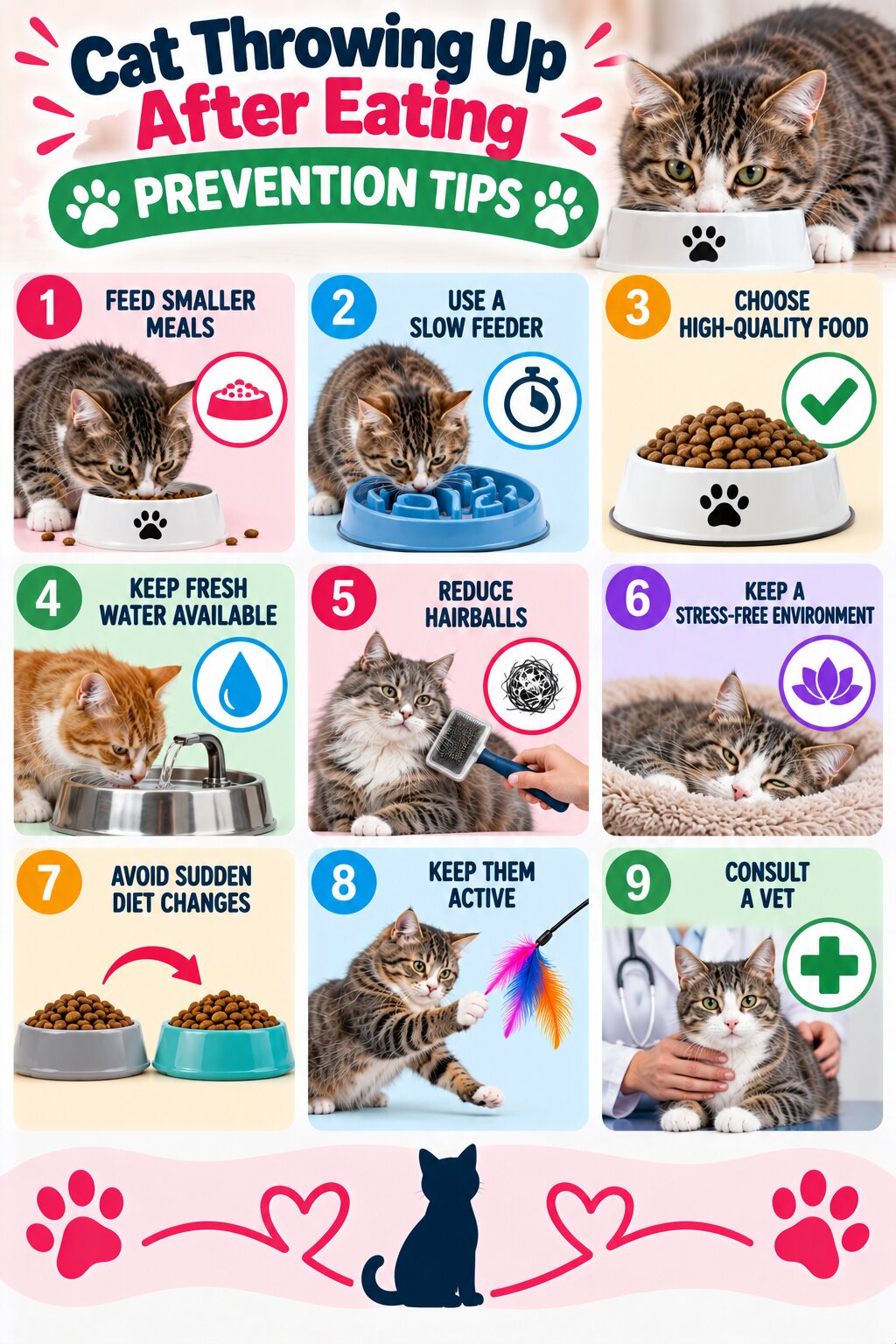
Feed Smaller Meals
This often helps immediately.
Use Puzzle Feeders
Slow eating reduces vomiting risk.
Keep Fresh Water Available
Hydration supports digestive health.
Avoid Sudden Food Changes
Gradual transitions reduce stomach upset.
Brush Regularly
Reducing swallowed hair may help prevent digestive irritation.
Common Myths About Cats Vomiting After Eating
Myth 1: Vomiting Is Normal for Cats
Frequent vomiting is not considered normal.
Myth 2: Hairballs Cause Every Vomiting Episode
Many medical conditions cause vomiting unrelated to hairballs.
Myth 3: Cats Always Outgrow Fast Eating
Many cats continue gulping food throughout life.
Myth 4: If My Cat Eats Again, It Must Be Fine
Some cats continue eating despite significant illness.
Final Thoughts
A cat throwing up after eating may simply be eating too quickly, especially when vomiting occurs immediately after meals and the food appears undigested. In many cases, slow feeders, smaller meals, and feeding management solve the problem.
However, frequent vomiting, daily regurgitation, weight loss, poor appetite, or an inability to keep food down may indicate a more serious medical issue. If vomiting becomes persistent or is accompanied by other symptoms, consult your veterinarian promptly to identify the underlying cause and begin appropriate treatment.
Frequently Asked Questions
Why does my cat throw up immediately after eating?
The most common reason is eating too fast, although medical conditions can also contribute.
Why is my cat vomiting undigested food?
Undigested food often indicates rapid eating or regurgitation.
Is it normal for cats to throw up after eating?
Occasional episodes may occur, but frequent vomiting is not normal.
Why does my cat throw up after eating wet food?
Rapid eating, food intolerance, or sudden diet changes are common causes.
Why does my cat throw up after eating dry food?
Dry food may be eaten too quickly or trigger digestive irritation.
Can grass cause cats to vomit?
Yes. Many cats vomit after eating grass.
Why does my cat vomit after drinking water?
Drinking too quickly or underlying illness may be responsible.
When should I worry about vomiting?
Daily vomiting, weight loss, or appetite changes require veterinary attention.
Can food allergies cause vomiting?
Yes. Food allergies commonly trigger chronic digestive symptoms.
What can I do if my cat eats too fast?
Use puzzle feeders, slow-feed bowls, and smaller, more frequent meals.

Tammy is the passionate cat enthusiast behind Absolutely Cats. Her journey began with a childhood filled with furry companions, leading her to advocate for cat well-being and a connoisseur of all things feline. Tammy’s dedication to the world of cats is evident in every article, guide, and review she pens.